
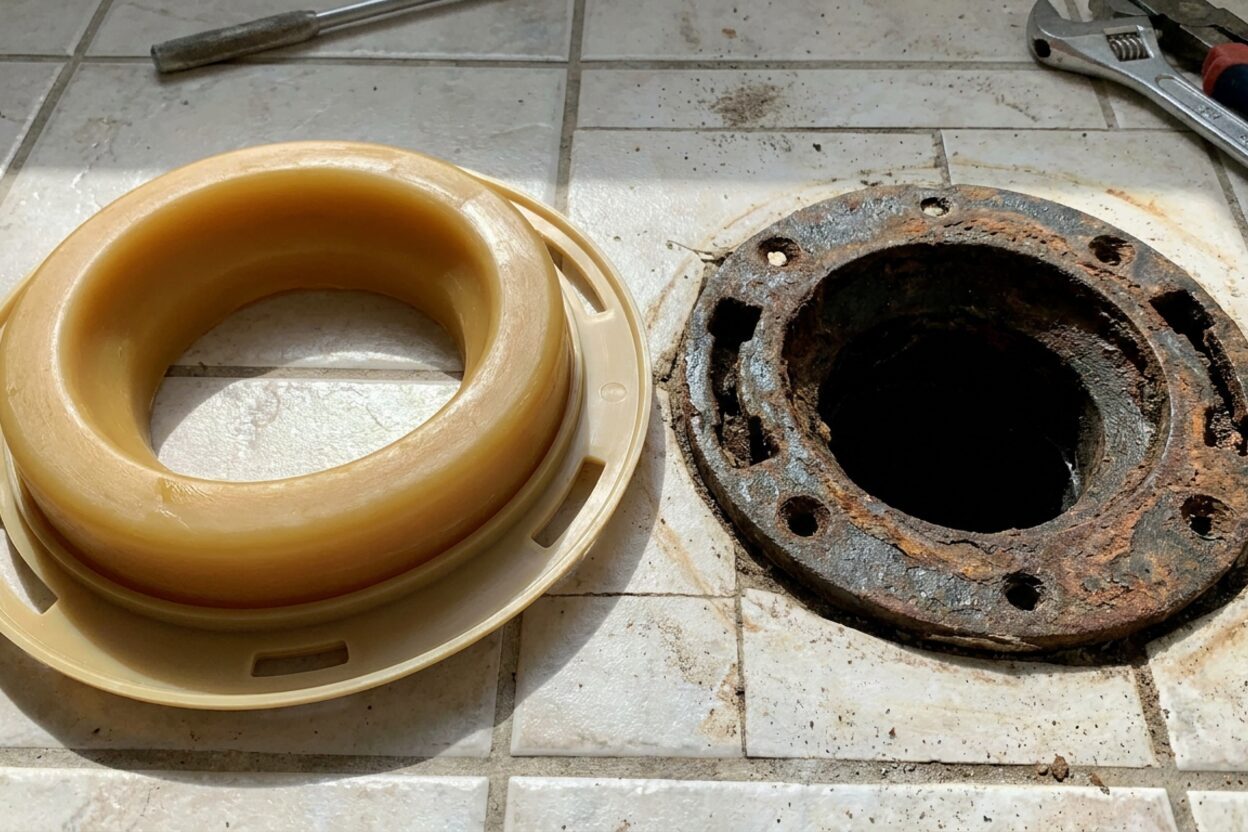
Toilet Leaking at the Base: Wax Ring, Flange & Reseating Guide
Quick Answer
The full guide to a toilet leaking at the base: diagnosing the real source, replacing the wax ring, dealing with a rocking toilet and broken flange, the caulk debate, and the plumber-gate.
First, confirm it's actually a base leak
Water on the floor around a toilet isn't always a failed seal. Before you pull the toilet, rule out the two impostors:
- Tank condensation (sweating). If the water is clean, shows up on humid days whether or not anyone flushed, and there's no odor, cold porcelain is just sweating and dripping. That's not a leak — see the sweating-tank fix.
- A supply-line or tank-bolt drip running down and pooling at the base, which looks like a base leak but isn't. Dry everything, then feel the supply connections and the tank-to-bowl area.
A true wax-ring leak typically appears (or worsens) right after a flush and may smell of sewer gas. Diagnosis walkthrough: Toilet Leaking From the Bottom? and Toilet Leaks at Base Only When Flushed.
Fix the wobble first — it's often the whole problem
A toilet that rocks even slightly will flex and break the wax seal over time, which is how many base leaks start. If the toilet rocks but the flange underneath is solid, you can often level it with plastic toilet shims and caulk, no pull required. If it rocks a lot, or you already smell sewer gas, it needs to come up. See Why Does My Toilet Rock?
Replacing the wax ring
- Turn off the supply and flush to empty the tank, then sponge out both tank and bowl so you're not lifting a toilet full of water.
- Disconnect the supply line, pop the bolt caps, and unscrew the two nuts holding the toilet to the floor.
- Rock the toilet gently to break the old seal and lift it straight up (get a helper — toilets are heavy and awkward). Set it on a towel or cardboard.
- Scrape all the old wax off the toilet's horn and off the flange. Stuff a rag in the drain opening to block sewer gas while you work.
- Inspect the flange (next section). Fit the new wax ring, remove the rag, and set the toilet straight down over the bolts in one motion — don't set it down and slide it, or you'll smear the seal.
- Press down with your weight to compress the wax, snug the nuts alternately (never over-tighten — porcelain cracks), reconnect the water, and run several flushes watching the base.
Full detail: How to Replace a Toilet Wax Ring and How to Reseat a Toilet After It Leaks.
Dealing with a broken flange
The flange is the ring that anchors the toilet and holds the wax seal. If it's cracked or the bolt slots are broken, a new wax ring alone won't hold. Depending on the damage you can add a metal flange-repair ring over the old one, or use a flange extender if new flooring left the flange sitting too low. A flange should sit at or just above the finished floor. See How to Fix a Broken Toilet Flange.
The caulk debate — both sides are legitimate
Should you caulk the toilet base to the floor? There are two honest camps, and you'll see plumbers on both:
- Caulk it: many local codes require it for sanitation and it stops the toilet shifting.
- Leave a gap at the back: so that if the wax ring ever fails again, water escapes visibly onto the floor instead of hiding under the base and rotting the subfloor.
A common compromise is to caulk the sides and front but leave a small gap at the rear as an early-warning path. Check whether your local code specifies one way before you decide.
When to call a plumber
Pulling and resetting a toilet is a reasonable weekend job, but bring in a pro if you find the flange is below floor level and set into a damaged or rotted subfloor, if the drain pipe itself is cracked, or if there's soft, water-damaged flooring around the toilet — that's structural repair, not a wax ring.
 Fluidmaster 7511 Toilet Wax Ring with Flange and Bolts
View on Amazon →
Fluidmaster 7511 Toilet Wax Ring with Flange and Bolts
View on Amazon →
 2 PCS Toilet Floor Bolts and Caps Closet, Universal Toilet Bowl to Floors Bolt Kits Stainless Steel Toilets Fixing Bolts and Nuts Set Toilets Closet Bolt Set with Washers and Cover Cap Decorative
View on Amazon →
2 PCS Toilet Floor Bolts and Caps Closet, Universal Toilet Bowl to Floors Bolt Kits Stainless Steel Toilets Fixing Bolts and Nuts Set Toilets Closet Bolt Set with Washers and Cover Cap Decorative
View on Amazon →
 Oatey Fix-It Stainless Steel Flange Repair Ring, Adjustable Toilet Flange Repair Kit for Broken or Cracked Mounting Flanges, Secure Seal
View on Amazon →
Oatey Fix-It Stainless Steel Flange Repair Ring, Adjustable Toilet Flange Repair Kit for Broken or Cracked Mounting Flanges, Secure Seal
View on Amazon →
 Flexible Plastic Shims 12pcs Kit Size Variety | Clear Leveling Kit for Home Improvement | Furniture Leg Stabilizers | Table & Toilet Shims - Trim-to-Fit Wedges | Stackable Design | Furniture Levelers
View on Amazon →
Flexible Plastic Shims 12pcs Kit Size Variety | Clear Leveling Kit for Home Improvement | Furniture Leg Stabilizers | Table & Toilet Shims - Trim-to-Fit Wedges | Stackable Design | Furniture Levelers
View on Amazon →

Still need help? Ask a Plumbing Expert AD
Get a personalized answer from a verified plumbing expert. Describe your issue and get step-by-step help.