
Toilet Fill & Flush Valves: Diagnose, Adjust & Replace
Quick Answer
A full guide to the two valves that run your toilet: how the flush works, diagnosing no-flush and weak-flush, adjusting the water level correctly, and replacing a worn fill valve.
How the tank works (60 seconds)
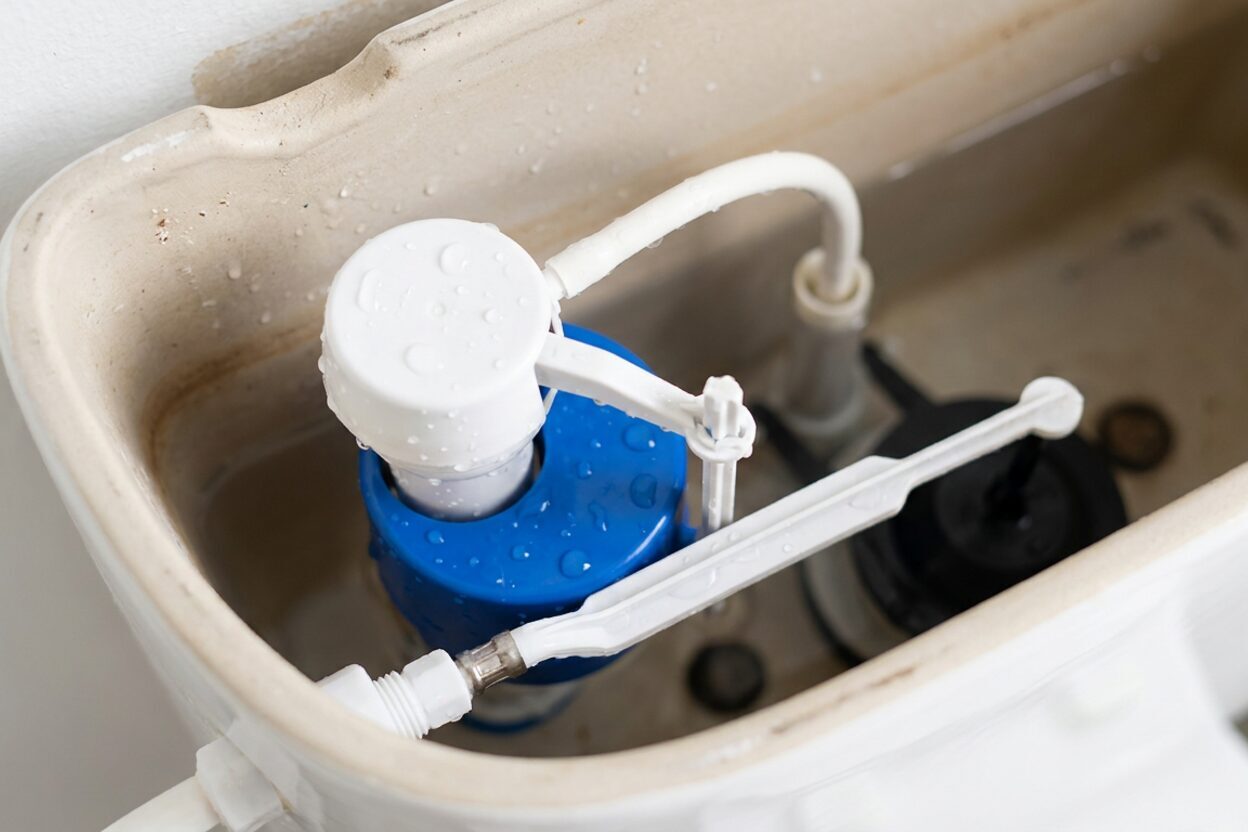
Understanding two parts explains almost every tank problem. The fill valve is the tower on the left; it refills the tank after a flush and shuts off at a set level. The flush valve is the big opening in the middle with the flapper; when you push the handle, the flapper lifts and dumps the tank into the bowl to create the flush. The vertical pipe in the middle is the overflow tube, a safety drain that sends water to the bowl if the fill valve ever fails to shut off.
Toilet won't flush at all
If the handle is limp or the flush is dead, work through it in order: check the handle-to-flapper chain (disconnected or badly tangled?), confirm there's water in the tank, and make sure the flapper is actually lifting when you press the handle. A snapped chain or lift arm is the most common no-flush cause and a two-minute fix. Full diagnosis: Toilet Won't Flush? Diagnose & Fix It Fast.
Weak or partial flush
A flush that barely swirls or needs a second go usually comes down to two things:
- Low water level in the tank. Less water stored means less flushing power. Bring the level up to about an inch below the top of the overflow tube.
- Clogged rim jets. Those little holes under the rim of the bowl deliver the swirl, and they scale shut over the years. Clear them with a small mirror and a piece of wire and soak with white vinegar to dissolve the mineral buildup.
Details: Why Is My Toilet Flushing Slowly and Weakly?
Setting the water level correctly
The single most useful adjustment on a toilet. The target is about one inch below the top of the overflow tube. Too low and the flush is weak; too high and water spills into the overflow and the toilet runs. Modern valves adjust with a screw or a clip on the float; older ballcock valves adjust by gently bending the float arm. Walkthrough: How to Adjust Toilet Tank Water Level.
Hissing, trickling, or a tank that won't fill
- Constant hiss after the flush finishes is water still passing through the fill valve — usually the level is set too high or the valve seal is worn. See Toilet Hissing After Flushing?
- Tank fills very slowly or not at all can be a partly-closed supply valve, a kinked supply line, or debris in the fill valve. See Toilet Tank Not Filling?
Replacing the fill valve
When a fill valve is worn out, replacing the whole unit is easier than rebuilding it — and it's one of the most satisfying 15-minute toilet jobs.
- Turn off the supply at the shutoff valve behind the toilet and flush to drain the tank.
- Sponge out the last of the water so nothing spills.
- Disconnect the supply line, unscrew the lock nut under the tank, and lift the old valve out.
- Drop in the new valve, set its height per the instructions, reconnect, and turn the water back on slowly.
- Watch it fill and shut off, then check every connection for drips for a minute or two before you walk away.
Full step-by-step: How to Replace a Toilet Fill Valve.
A word on tightening
The plastic nuts on fill valves and supply lines crack if you over-torque them. Hand-tighten, then give just a nudge with a wrench — snug, not gorilla-tight. If a connection weeps, a fraction of a turn usually stops it.

Still need help? Ask a Plumbing Expert AD
Get a personalized answer from a verified plumbing expert. Describe your issue and get step-by-step help.