
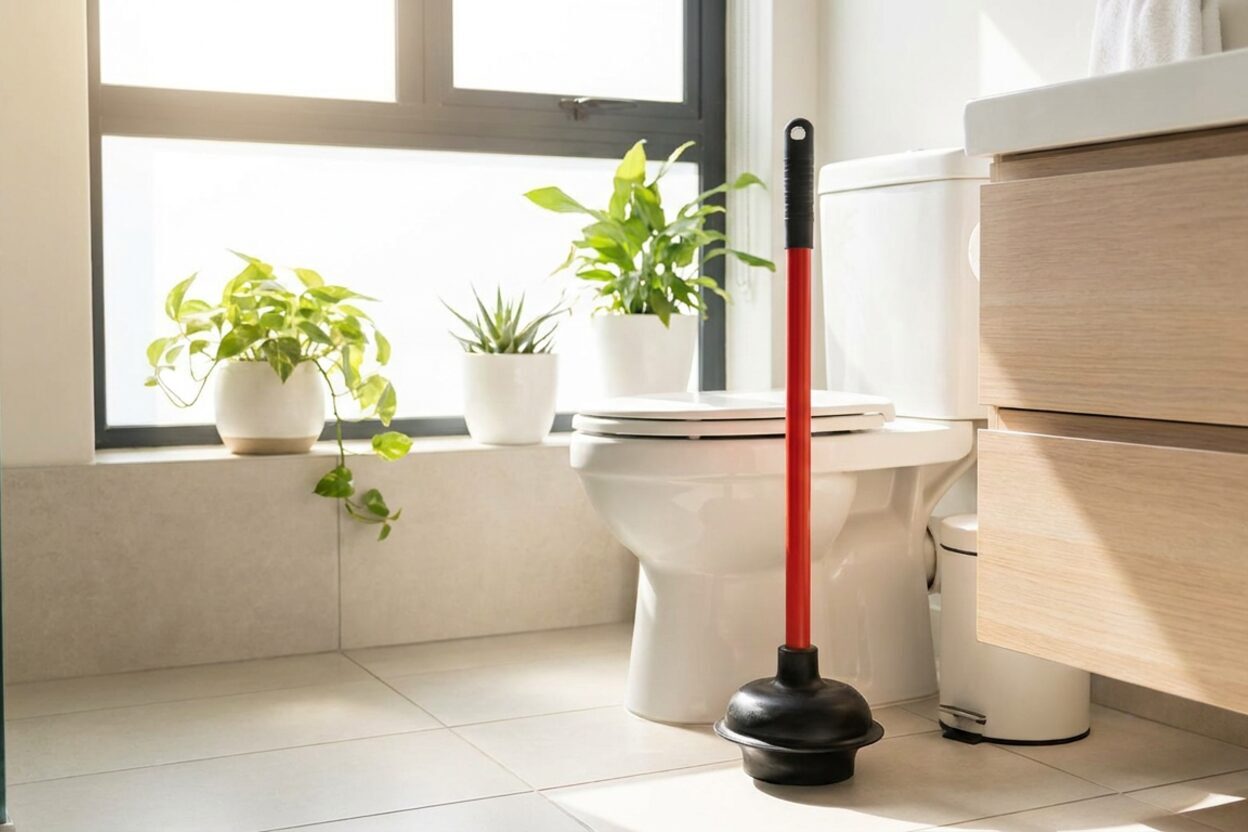
How to Unclog a Toilet: The Complete Guide
Quick Answer
The complete method for clearing a toilet clog: the right plunger and how to use it, the closet auger, what never to pour in, recurring-clog causes, and the backup that means calling a plumber.
Start here: the right plunger, used the right way
Most toilet clogs come out with a plunger — but only if it's the right kind and you get a real seal. Use a flange plunger, the one with an extra rubber sleeve that folds out of the cup. That sleeve seats into the drain opening and lets you build actual pressure; the flat cup plungers made for sinks won't seal a toilet.
- Make sure there's enough water in the bowl to cover the plunger head. If the bowl is nearly empty, add water — you're pushing water, not air.
- Seat the flange into the drain and press down slowly to push out trapped air (a fast first shove just splashes).
- Now pump firmly 10–15 times, keeping the seal, then pull up sharply to break it. The push and the pull both work on the clog.
- Repeat a few cycles. When it clears, the water drops with a gurgle.
No plunger handy? A few methods can substitute — see How to Unclog a Toilet Without a Plunger.
Never reach for chemical drain cleaner
This is the one hard rule of toilet clogs: do not pour liquid chemical drain cleaner (Drano and the like) into a toilet. Here's why it's the wrong tool and a genuine hazard:
- It rarely works. Toilet clogs are usually paper or waste, not the grease and hair those products are formulated to dissolve.
- The toilet's trap holds the caustic liquid against the porcelain instead of letting it flow through, so it just sits there.
- That standing caustic liquid becomes a serious splash-back burn hazard the moment you plunge or auger afterward.
The full explanation is in Can You Put Drano in a Toilet? Stick with mechanical methods, which are both safer and more effective.
When the plunger won't do it: the closet auger
If plunging fails after a couple of honest attempts, step up to a closet auger (also called a toilet auger). It's a curved tube with a crank-fed cable and a rubber sleeve that protects the bowl finish. Feed the cable in, crank until you feel the clog, and work it through — the auger can grab and pull out things a plunger only pushes deeper, like a toy or a wad of wipes.
Skip the long drum augers meant for floor drains and sink lines; the short closet auger is the right length and won't scratch the porcelain. How-to: How to Use a Toilet Auger to Clear a Clog.
Why it keeps clogging
If you're plunging the same toilet over and over, you have a root cause, not bad luck. Common ones:
- Too much paper or "flushable" wipes. Wipes don't break down and are a leading cause of repeat clogs and blocked lines.
- A weak flush not carrying waste out — often a low tank level or scaled rim jets (see the weak-flush fix).
- An older low-flow toilet or a partial obstruction deeper in the line.
- A blocked vent stack, which starves the flush of air and makes it sluggish.
More on tracking it down: Why Does My Toilet Keep Clogging?
When to stop and call a plumber
Clearing your own toilet is normal DIY, but stop and call a professional if:
- More than one fixture is backing up — if flushing the toilet gurgles the tub or the sink drains slowly, the blockage is in the main line, not the toilet.
- Sewage is coming up in a tub or shower.
- You've augered thoroughly and it won't clear, suggesting an obstruction beyond the toilet.
Those are signs of a main-drain problem that a plunger or closet auger can't reach.
 Closet Auger, 6 ft Cable Lg, 1/2 in Cable Dia, Power Drill Compatible, Bulb Head, Manual Cable Feed - 1 Each
View on Amazon →
Closet Auger, 6 ft Cable Lg, 1/2 in Cable Dia, Power Drill Compatible, Bulb Head, Manual Cable Feed - 1 Each
View on Amazon →
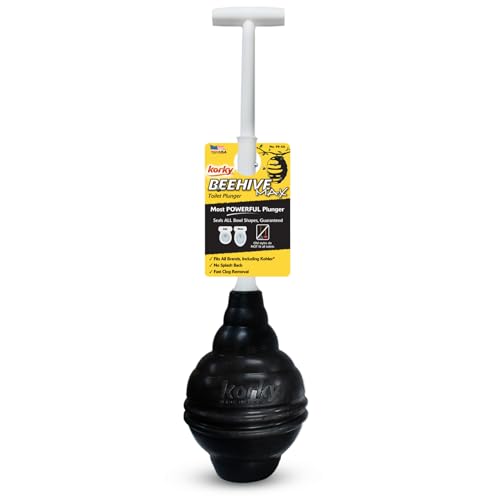 Korky BeehiveMAX Heavy Duty Toilet Plunger - Seals All Bowl Shapes – Powerful Clog Removal
View on Amazon →
Korky BeehiveMAX Heavy Duty Toilet Plunger - Seals All Bowl Shapes – Powerful Clog Removal
View on Amazon →

Still need help? Ask a Plumbing Expert AD
Get a personalized answer from a verified plumbing expert. Describe your issue and get step-by-step help.