
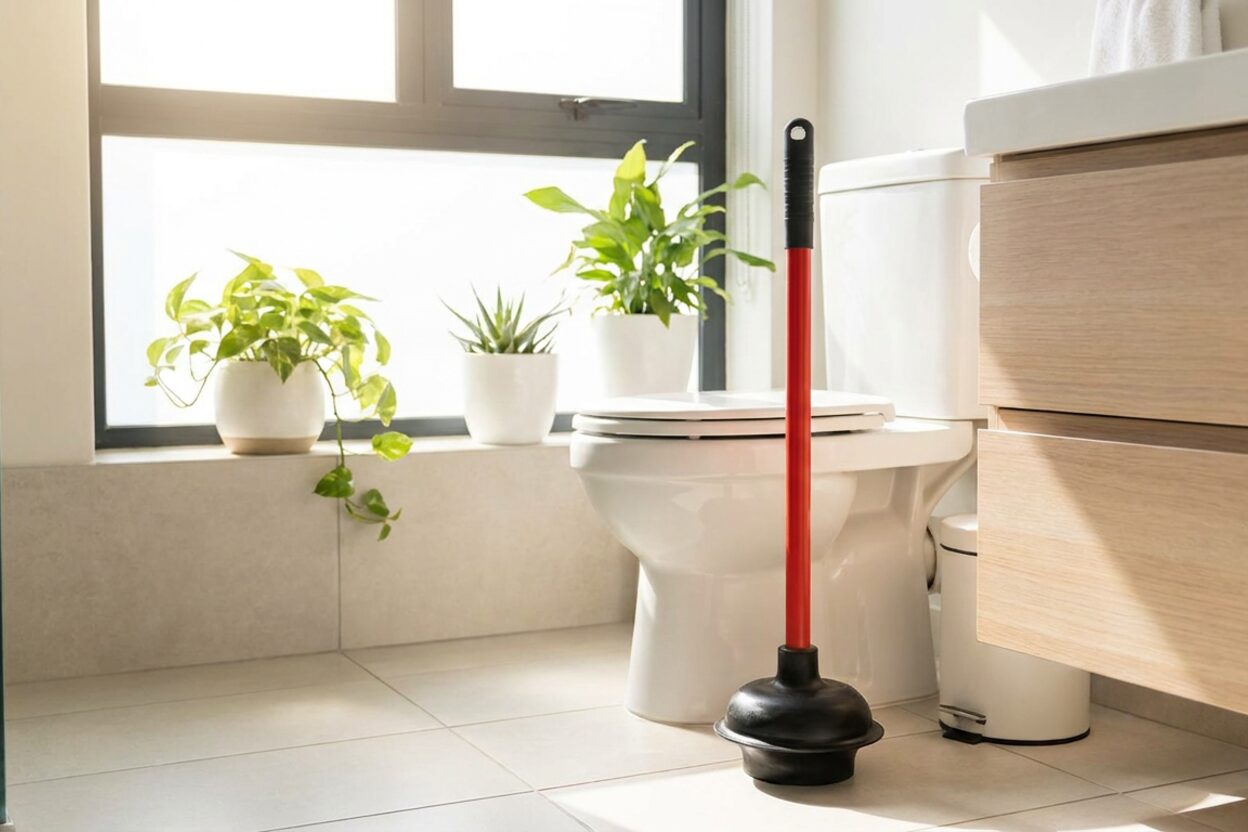
Can You Put Drano in a Toilet? Safe Alternatives

My Old Toilet Is Clogged — Is Drano Safe to Use in It?
Read full question
Looked under the sink and found an old bottle of Drano sitting there, and I'm wondering if I can just pour it into the toilet bowl to clear the slow drain. My toilet is probably 20+ years old and starting to drain sluggishly after flushing — not completely blocked, but definitely not moving like it should. Would using a chemical drain cleaner like Drano do the trick, or is that going to cause problems with an older toilet?
Quick Answer
You should not put Drano or any chemical drain cleaner in a toilet — the manufacturers themselves say so. Drano's maker states its clog removers are ineffective in toilets, and Liquid-Plumr's label reads "do not use in toilets." It also creates a splash-back burn hazard for anyone who plunges afterward. A flange plunger or a toilet (closet) auger is the right tool for the job.
The Short Answer: Keep Drano Away from Your Toilet
It's a natural instinct — you have a slow or clogged toilet, there's drain cleaner under the sink, so why not give it a shot? The problem is that toilets work very differently from sink or shower drains, and chemical drain cleaners like Drano are genuinely the wrong tool here. This isn't just cautious advice from plumbers — it's the manufacturers' own instruction. SC Johnson, which makes Drano, states plainly that its liquid and gel clog removers should not be used in toilets, and Liquid-Plumr's label says the same: do not use in toilets.
Below, I'll compare three options for tackling a sluggish or blocked toilet — chemical drain cleaners (what not to do and why), a flange plunger (your first move), and a toilet auger (the step-up when plunging isn't enough) — so you can pick the right approach for your situation.
Option 1: Chemical Drain Cleaner (Drano & Similar Products)
How it works
Chemical drain cleaners use caustic or oxidizing chemicals — typically lye (sodium hydroxide) or bleach-based compounds — to dissolve organic clogs. They work reasonably well on hair and soap scum sitting in an open pipe, but a toilet clog is a different animal entirely.
Why it fails (and causes harm) in a toilet
- The manufacturers themselves say no. Drano's own FAQ says its liquid and gel clog removers are not for toilets — in the company's words, the toilet's trap configuration keeps the product from reaching where clogs form, so it's simply ineffective there. Liquid-Plumr's label is even more direct: "Do not use with a plunger or in toilets." When the people selling the product tell you not to pour it in a toilet, that settles the question.
- It can't do its job in a toilet. These products are formulated to sink through a few inches of standing water in a sink and dissolve hair, grease, and soap scum. A toilet bowl and trap hold a gallon or two of water, which dilutes the product before it ever reaches the clog — and toilet clogs are wet-strength paper, waste, or solid objects, which caustic cleaners barely touch anyway.
- Splash-back hazard. If the cleaner doesn't work and you (or anyone else) tries to plunge afterward, you risk splashing a highly caustic chemical onto your skin, eyes, and clothing. This is a genuine burn hazard, not a minor concern.
- It can react with what's already in the bowl. Liquid-Plumr's own warnings note that it reacts with ammonia, acids, and toilet bowl cleaners to produce hazardous gases, including chlorine compounds. A toilet is exactly where bowl-cleaner residue lives.
You'll also often read that the reaction heat can crack the porcelain bowl. Treat that claim carefully: it traces back to old-style crystal lye openers, which reacted violently with water, and I've never seen a documented case involving today's gel products diluted in a bowl of cold water. Porcelain can crack from severe thermal shock — that part is real — but the manufacturers' own warnings don't mention it, and the case against drain cleaner in a toilet doesn't need it.
Verdict: Not recommended — by the manufacturers themselves. It isn't effective in a toilet, and the splash-back and chemical-mixing risks are real.
Option 2: A Flange (Bell) Plunger — Start Here
How it works
A flange plunger has a rubber cup with an extended inner lip (the flange) that folds out to seal directly into the toilet's drain opening. This creates a tight seal so you can generate real pressure — both pushing and pulling — to dislodge the clog. A standard cup plunger (the flat-bottomed kind) won't seal properly against a toilet drain and is far less effective.
Pros
- Inexpensive and widely available
- No chemicals involved — safe for older porcelain
- Effective for the majority of common toilet clogs
- Fast — most clogs clear in a few minutes of work
Cons
- Won't reach or break up a clog that's deeper in the drain line
- Can be ineffective against a solid foreign object lodged in the trap
How to use it
- Make sure there's enough water in the bowl to cover the plunger cup — this helps maintain the seal. If the bowl is low, add some water.
- Insert the flange into the drain opening and press down slowly to push out the air before you start.
- Push and pull firmly with steady strokes, keeping the seal intact, and repeat as needed until the water begins to drain.
- Pull up sharply on the last stroke to break the seal and create suction.
- Repeat as needed. If the water drains and the flush returns to normal, you're done.
Verdict: This is your first move, every time. It resolves the majority of household toilet clogs without any chemical risk to your old porcelain.
Option 3: A Toilet Auger (Closet Auger) — When Plunging Isn't Enough
How it works
A toilet auger — sometimes called a closet auger — is a purpose-built tool with a flexible cable that feeds through the toilet trap, a protective rubber sleeve to prevent scratching the bowl, and a hand crank to rotate the cable. It can either break up a stubborn clog or hook a foreign object and pull it out.
Pros
- Reaches several feet into the drain, well past the trap
- Can retrieve solid obstructions a plunger can't move
- Still completely chemical-free — no risk to porcelain
- Reusable; a quality auger lasts for many years
Cons
- Slightly more technique involved than plunging
- Higher upfront cost than a plunger, though widely available at hardware stores
- Won't help if the clog is far down the main drain line
How to use it
- With the cable fully retracted, place the rubber sleeve into the bowl drain opening.
- Crank the handle clockwise while gently pushing the cable forward into the drain.
- When you feel resistance, continue cranking — you're either breaking up the clog or hooking it.
- Slowly retract the cable; if you snagged an object, it will come back with it.
- Flush to confirm the drain is clear.
Verdict: The right upgrade when plunging hasn't worked after a few solid attempts. For an older toilet with a stubborn or recurring clog, this is a worthwhile tool to have on hand. You can also find more guidance in our clog and blockage answers.
When to Call a Plumber
If neither plunging nor augering clears the clog, or if other drains in your home are also backing up at the same time, the problem may be in the main drain or sewer line — not the toilet itself. That's a job for a licensed plumber with professional equipment. Similarly, if your older toilet shows any cracks in the bowl or tank, chemical damage, or the flange appears broken or sitting below the finished floor level, professional evaluation is the right call.
 Closet Auger, 6 ft Cable Lg, 1/2 in Cable Dia, Power Drill Compatible, Bulb Head, Manual Cable Feed - 1 Each
View on Amazon →
Closet Auger, 6 ft Cable Lg, 1/2 in Cable Dia, Power Drill Compatible, Bulb Head, Manual Cable Feed - 1 Each
View on Amazon →
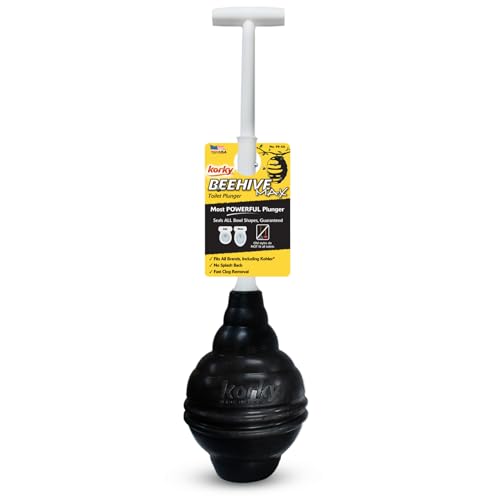 Korky BeehiveMAX Heavy Duty Toilet Plunger - Seals All Bowl Shapes – Powerful Clog Removal
View on Amazon →
Korky BeehiveMAX Heavy Duty Toilet Plunger - Seals All Bowl Shapes – Powerful Clog Removal
View on Amazon →

Still need help? Ask a Plumbing Expert AD
Get a personalized answer from a verified plumbing expert. Describe your issue and get step-by-step help.