
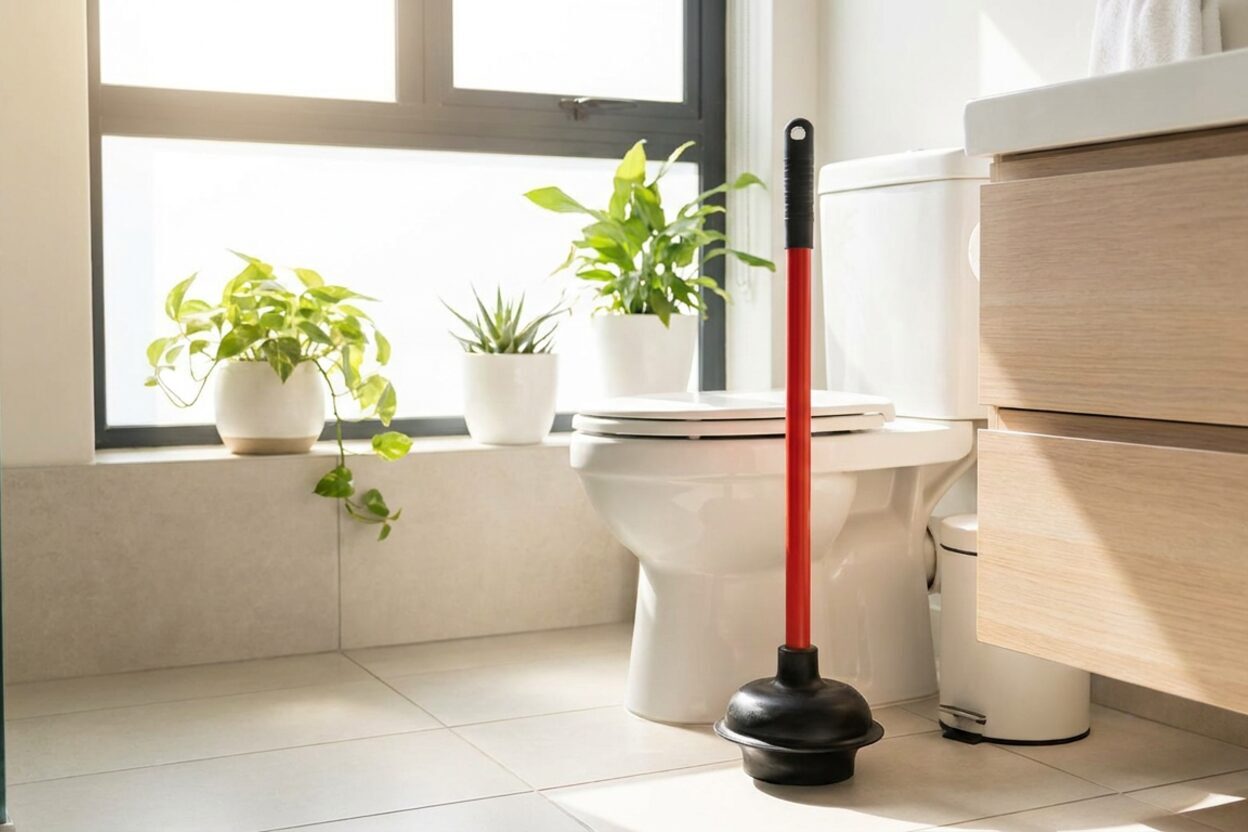
How to Unclog a Toilet Without a Plunger

Toilet clogged and no plunger in sight — what now?
Read full question
My neighbor's bathroom never seems to have any drama — she's got kids the same age as mine and somehow her toilet just always works. Meanwhile I'm standing here on a Saturday morning with a backed-up toilet, a sink full of dishes, and zero plungers in the house. I have no idea how we don't own one, but here we are.
The bowl is sitting about three-quarters full and I'm nervous about trying to flush again. I've heard you can use dish soap or baking soda and vinegar, but I'm not sure if those actually work or if I'll just make things worse. Is there a method that's actually reliable without a plunger, or am I going to end up calling someone out on a weekend?
Quick Answer
You can unclog a toilet without a plunger using several household methods: dish soap plus hot water, a baking soda and vinegar fizz, a padded wire hanger, or a wet/dry shop vacuum. Start with the simplest option first, work up to mechanical tools if needed, and call a plumber if nothing clears it or if multiple drains are backing up at once.
First Things First — Stop the Water
Before trying anything, reach behind the toilet and turn the shutoff valve clockwise until it stops. This kills the water supply so a stray flush attempt won't cause an overflow. Put on rubber gloves — it's a good idea any time you're working around toilet water — and if the bowl is very full, use a cup and bucket to bail it down to about halfway. You want enough water in the bowl to help push the clog, but not so much that it sloshes over. Lay old towels around the base of the toilet while you work.
One important thing to know upfront: do not pour liquid chemical drain cleaners (like Drano) into a toilet. The toilet's trap holds the caustic liquid against the porcelain, creating a burn splash-back risk for anyone who then plunges, and these products rarely clear a toilet clog anyway. The methods below are safer and more effective.
Start Simple: Dish Soap and Hot Water
This is the go-to first attempt because every household has what's needed. Pour roughly half a cup of liquid dish soap directly into the bowl and let it sink for a minute or two — it acts as a lubricant around the clog. Then fill a large pot or pitcher with the hottest tap water you can get (not boiling; boiling water can crack the porcelain) and pour it from about waist height in a slow, steady stream. The combination of height, heat, and soap can soften and shift a surprising number of clogs.
Let everything sit for 15–20 minutes, then attempt a flush. If the water drains normally, you're done. If it drains slowly but doesn't fully clear, try a second round before moving on.
The Baking Soda and Vinegar Method
You'll see this one recommended everywhere, so it deserves an honest word on the chemistry: baking soda and vinegar mostly neutralize each other, and the fizz is just carbon dioxide escaping — it has no real clog-clearing power of its own. When this method appears to work, the credit usually belongs to the long soak and the hot-water flush that follow, not the fizz. If you want to try it anyway: pour one cup of baking soda into the bowl, slowly add two cups of white vinegar, let it sit for 15–30 minutes, then add hot water and flush. It won't move a hard foreign object — and the dish soap and hot water method above does the same job with a mechanism that actually holds up.
Mechanical Methods for Stubborn Clogs
The Wire Hanger Trick
Straighten a wire coat hanger as much as you can, then fold a small piece of rag or a hand towel over the tip and secure it with duct tape. The padding protects the porcelain from scratches. Gently insert the padded end into the drain opening and use a slow push-and-twist motion to break up whatever's blocking the trap. You're not trying to pull anything out — just break it apart enough to flush through. When you feel the resistance loosen, try flushing.
The Toilet Brush Push
For a clog that's very close to the surface, a sturdy toilet brush can act as a makeshift plunger. Insert the bristle end into the drain opening and push and pull it repeatedly with a firm seal around the opening. It won't work as well as a real plunger, but it can shift shallow blockages in a pinch.
The Plastic Bottle Pressure Hack
Fill a large plastic bottle — a two-liter soda bottle works well — with hot water. Place the opening over the toilet drain opening and squeeze the bottle hard and repeatedly. The pulses of pressurized water mimic a plunger's action. Wear gloves and eye protection for this one since there will be splashing.
Wet/Dry Shop Vacuum
If you have a wet/dry shop vacuum available, this can be surprisingly effective. First, use it to suction out excess water from the bowl. Then wrap the hose end in an old towel to create a seal, place it over the drain opening, and switch to suction mode for several seconds. The vacuum can pull a clog up and out rather than pushing it through. Empty the vacuum's canister outside when you're done, not down another drain.
When You Need a Proper Drain Tool
If none of the above methods move the clog, the blockage is likely deeper in the trap or drain line and requires a toilet auger (also called a closet auger). This is a coiled cable tool designed specifically for toilets — it has a protective sleeve that won't scratch the bowl and enough reach to get past the trap. Manually feed the cable in, crank the handle, and the coil breaks up or retrieves the obstruction. Augers are widely available at hardware stores and are the tool plumbers themselves reach for on this exact problem. For more guidance on dealing with drain blockages, check out our clogs and blockages help section.
When to Call a Plumber
Some situations call for professional help, and recognizing them early saves time and frustration:
- Multiple fixtures are backing up at the same time — if the bathroom sink or tub is also draining slowly or gurgling when you flush, the problem is in the main sewer line, not the toilet itself. No household method will fix that.
- You can feel or see a hard foreign object (a toy, a toothbrush cap, etc.) — augering or pushing it further in can make things worse. A plumber can retrieve it properly.
- Nothing above has worked after genuine attempts — the clog may be too far down the line for DIY tools.
Preventing This in the Future
A common cause of toilet clogs is too much toilet paper in a single flush, followed by so-called "flushable" wipes — despite the label, these frequently contribute to blockages and shouldn't go in the toilet. Only toilet paper should go down, flushed in reasonable amounts. And yes — a quality flange plunger is worth keeping under the sink. It's the single most effective first tool for exactly this situation, and it takes up almost no space.
 Closet Auger, 6 ft Cable Lg, 1/2 in Cable Dia, Power Drill Compatible, Bulb Head, Manual Cable Feed - 1 Each
View on Amazon →
Closet Auger, 6 ft Cable Lg, 1/2 in Cable Dia, Power Drill Compatible, Bulb Head, Manual Cable Feed - 1 Each
View on Amazon →
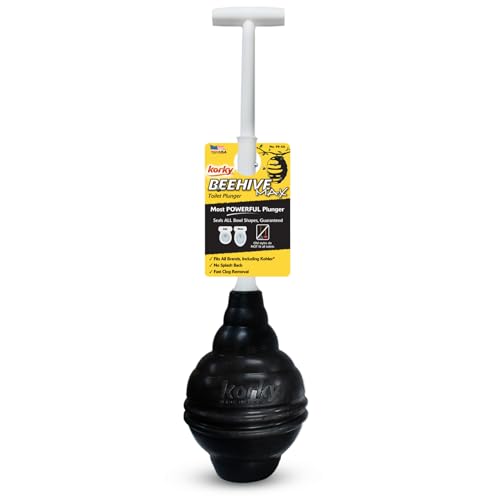 Korky BeehiveMAX Heavy Duty Toilet Plunger - Seals All Bowl Shapes – Powerful Clog Removal
View on Amazon →
Korky BeehiveMAX Heavy Duty Toilet Plunger - Seals All Bowl Shapes – Powerful Clog Removal
View on Amazon →

Still need help? Ask a Plumbing Expert AD
Get a personalized answer from a verified plumbing expert. Describe your issue and get step-by-step help.