
Toilet Tank Problems: Sweating, Leaks, Cracks & Loose Bolts
Quick Answer
A complete guide to toilet-tank troubles: condensation and how to stop it, tank-to-bowl leaks, tightening bolts without cracking the porcelain, and judging a cracked tank.
A sweating tank (condensation)
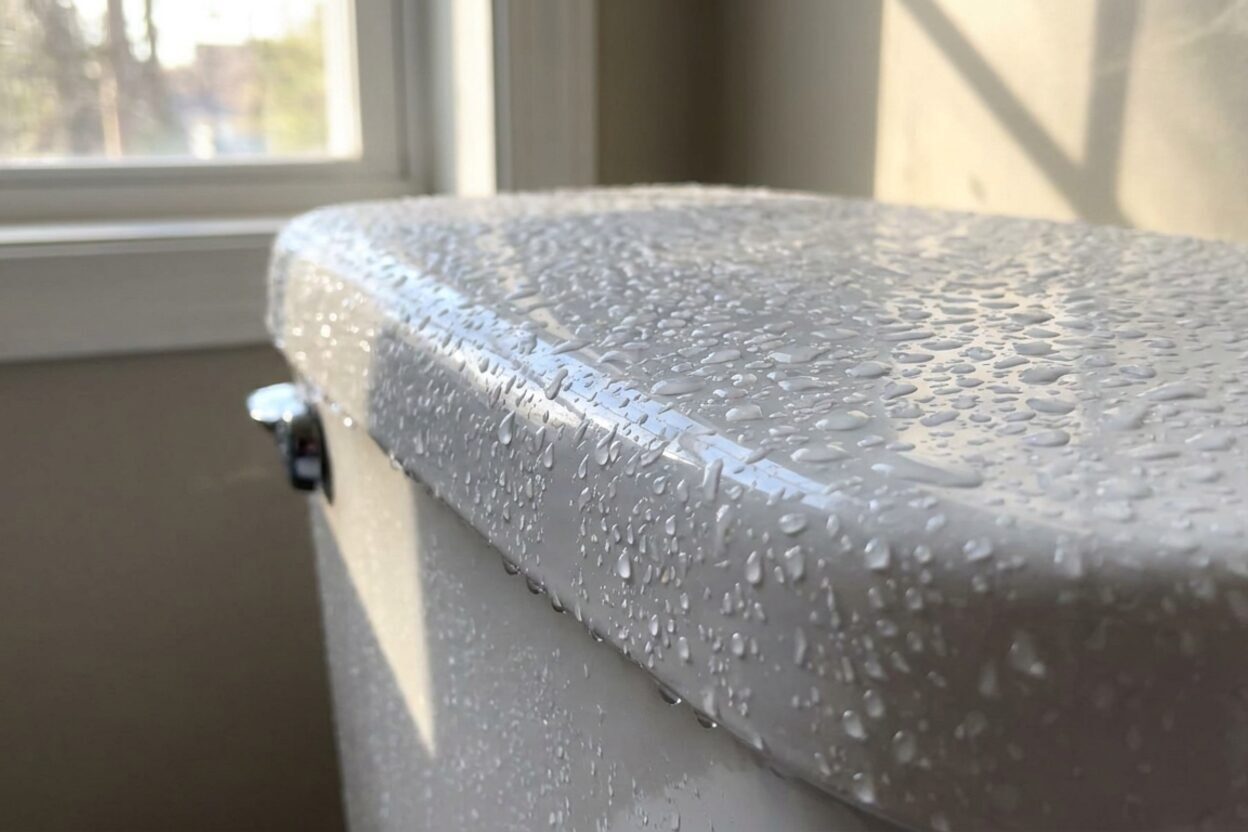
Puddles around the base on warm, humid days — with clean, odorless water that appears whether or not you've flushed — are almost always condensation, not a leak. Cold water sitting in the tank chills the porcelain; warm bathroom air hits that cold surface and beads up on the outside, exactly like a cold drink sweating in summer. It's harmless to the toilet but the drips can rot flooring over time.
How to stop it
- Improve ventilation — run the bathroom exhaust fan, especially after showers, to pull humid air out.
- Insulate the tank with a foam tank-liner kit so the porcelain surface no longer runs cold enough to condense.
- A dehumidifier in a chronically damp bathroom helps too.
More: Why Is My Toilet Tank Sweating? and How to Stop a Sweating Toilet Tank.
Leaking between tank and bowl
If water appears down the back of the bowl or drips from where the tank meets the bowl, suspect the large rubber tank-to-bowl gasket and the two tank bolts. Over time the gasket hardens and the bolts loosen. Gently try to wiggle the tank: any real movement means the bolts need attention. If snugging the bolts evenly doesn't stop it, the gasket kit (gasket plus bolt washers) is an inexpensive replacement — turn off the water, drain the tank, and lift it off the bowl to swap it. See Water Leaking Between Tank and Bowl?
Tightening tank bolts without cracking the tank
This is where a lot of tanks get broken. Porcelain has no give, so over-tightening a bolt splits it. The rule: hand-snug first, then a quarter turn at a time, alternating sides to keep the tank seating evenly. Hold the bolt head still inside the tank and turn the nut underneath. You want the leak to stop and the tank to feel stable — not maximum torque. Full method: How to Tighten Toilet Tank Bolts Safely.
Cracked tank: repair or replace?
Whether a crack is fixable depends on where it is and whether it's below the waterline:
- A fine, shallow hairline crack above the waterline is often cosmetic and can be monitored or sealed.
- Any crack below the waterline, or one that's actively weeping, means the tank can fail without warning and dump its whole contents on the floor. That's a replace, not a repair.
- Because tanks are matched to their bowls, a replacement tank has to fit your specific toilet — take the model number (usually stamped inside the tank) when you shop.
How to judge it: Cracked Toilet Tank: Repair or Replace?
Before any tank work
As with all toilet repairs, turn off the supply valve and flush to drain the tank before removing bolts or the tank itself, and sponge out the last of the water. Set the heavy tank lid somewhere flat and safe while you work — it's the most commonly cracked part of the whole toilet.


Still need help? Ask a Plumbing Expert AD
Get a personalized answer from a verified plumbing expert. Describe your issue and get step-by-step help.