
Why Does My Toilet Run Every Few Minutes?

Toilet Keeps Refilling on Its Own Every Few Minutes — Help?
Read full question
Looked up a video on how to stop a toilet from randomly running and ended up making things worse than when I started. The toilet in my apartment refills by itself every few minutes even when nobody's used it — it's like it briefly kicks on, runs for 10–15 seconds, then goes quiet again before starting the cycle all over. The landlord is slow to respond, so I figured I'd try to sort it out myself.
Followed a tutorial that said to adjust the float by bending the arm, but this toilet has a newer-style fill valve, not the old ballcock type, and now I'm not sure I adjusted the right thing. The running seems about the same if not slightly more frequent. I can hear it clearly from the hallway at night, which is getting pretty annoying.
Quick Answer
A toilet that cycles on by itself every few minutes is experiencing what's commonly called a 'phantom flush' — water is silently leaking out of the tank, and the fill valve kicks on to compensate. The two most likely culprits are a worn flapper that no longer seals properly or a fill valve with a water level set too high, causing water to spill into the overflow tube. Both are straightforward fixes that don't require special tools.
What's Actually Going On (It's Not Random)
That self-starting refill cycle has a very specific mechanical cause — it's not a quirk of the building, the time of day, or the season. Water is slowly leaking out of the tank, and once the water level drops far enough, the fill valve detects the drop and tops the tank back up. Repeat every few minutes. This is so common it has a name: a phantom flush.
The good news is there are really only two places the water can be going: either down through a leaky flapper into the bowl, or over the top of the overflow tube and down the drain. Pinpointing which one is happening takes about two minutes and no tools at all.
The Two-Step Diagnosis
Check the Overflow Tube First
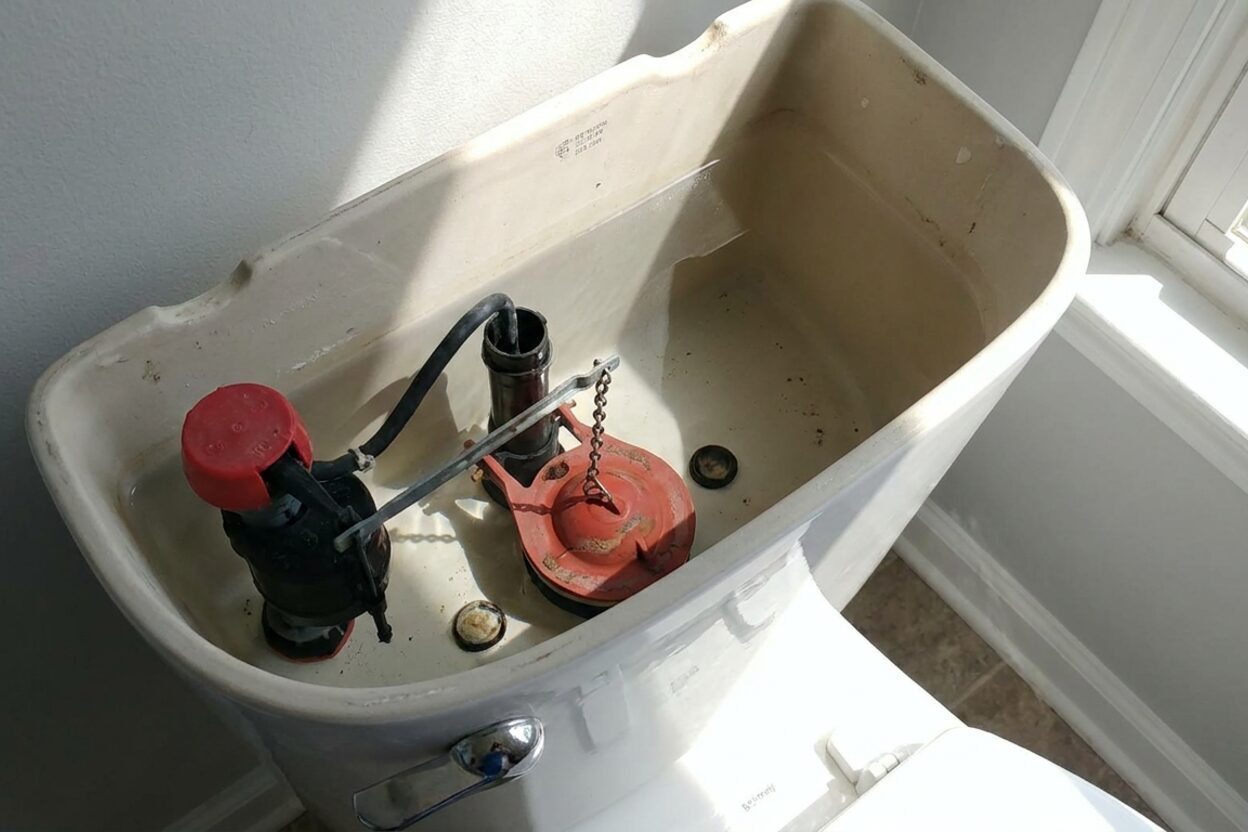
Take the tank lid off and look at the water level while the tank is full and quiet. The water surface should sit roughly an inch below the top of the tall plastic overflow tube in the center of the tank. If the water is at or above that tube's rim, water is continuously dribbling in — silently, but constantly. The fix here is adjusting your fill valve so it shuts off at a lower level. On modern tower-style fill valves, there's usually a twist-adjust collar or a clip on the side of the valve body. Turning it lowers the shutoff point. Your specific valve's instructions will show exactly which direction to turn — a quick look at the brand name stamped on the valve and a search for that model's adjustment method will get you there, since the mechanism varies slightly by manufacturer.
One important note when adjusting the fill valve: the critical-level (CL) mark molded onto the fill valve body must remain above the top of the overflow tube — commonly at least an inch above it. Only the water surface sits below the overflow tube rim. If lowering the shutoff point would bring the CL mark below the overflow tube top, the fill valve needs to be raised or replaced rather than simply adjusted downward.
Then Test the Flapper
If the water level looks fine — sitting a clear inch below the overflow tube — the leak is almost certainly the flapper. Drop a few drops of food coloring into the tank and don't flush. Wait 10–15 minutes without using the toilet. Then look in the bowl. If you see color in the bowl water, the flapper isn't sealing and water has been leaking through all along. No color means the flapper is holding.
Fixing a Leaky Flapper
This is one of the more approachable plumbing repairs there is. Replacement flappers are available at any hardware store, and many are adjustable to fit a range of flush valves. That said, fit is not truly universal — some brands and pressure-assist models require a brand-specific or flush-valve-matched flapper. Check the brand name or model stamped on the tank or flush valve before buying, and match accordingly.
Before you touch anything inside the tank: turn off the water supply at the angle-stop shutoff valve on the wall behind the toilet (turn clockwise until it stops), flush to drain the tank, and sponge out any remaining water at the bottom. Working in a dry tank is much easier and keeps water off the floor.
- Unhook the flapper ears from the pegs on either side of the flush valve seat, and disconnect the chain from the flush handle arm.
- Look at the flush valve seat — the ring the flapper sits against. Run a finger around it. If you feel mineral buildup, pitting, or a rough edge, wipe it down with a damp cloth. Stubborn mineral deposits can be gently cleared with a fine-grit scrubbing pad. A damaged seat that won't smooth out means the entire flush valve may need replacement. It's a bigger job than swapping a flapper — it involves removing the tank — but it's still a manageable DIY repair for most people. If you're renting, this is also a reasonable repair to request from your landlord.
- Snap the new flapper onto the pegs and reconnect the chain. Leave a small amount of slack in the chain — just enough that the flapper seats fully when the handle is at rest, but not so much excess chain that a loose loop can slip under the flapper and hold it open. Adjust by trial: flush, watch the flapper drop cleanly, and confirm the chain isn't pinching beneath it.
- Turn the water back on, let the tank fill, and repeat the dye test to confirm the seal.
A Note on the Season and Water Chemistry
While the phantom flush itself is a mechanical issue year-round, it's worth knowing that water quality and cleaning habits affect how quickly these parts wear. In-tank drop-in cleaners — the blue tablets — are hard on rubber flappers and can cause them to deteriorate faster than they otherwise would. If your apartment uses those, swapping to an exterior bowl cleaner is worth mentioning to the landlord. Harder water can also accelerate mineral buildup on the flush valve seat, making a perfect seal harder to maintain over time.
What About the Fill Valve Itself?
If adjusting the water level doesn't stop the overflow issue, or if the fill valve is noisy, slow to shut off, or visibly cracked, the valve itself may need replacing. Fill valves are widely available and most are height-adjustable to fit a range of standard tanks. Before purchasing, measure the interior height of your tank and confirm the replacement valve's adjustment range covers it — pressure-assist and non-standard tanks may have different requirements. Swapping one out follows a similar shut-off-drain-disconnect-reinstall sequence. If you're renting, a fill valve replacement is generally the kind of repair a landlord is responsible for — worth documenting the issue in writing if you haven't already.
For more on diagnosing what's happening inside the tank, our fill and flush valve section covers these components in more detail.
When to Loop In a Plumber
Most phantom flush situations are solved by a new flapper or a fill valve tweak. That said, if you find the flush valve seat is cracked or deeply pitted, if the tank itself has a hairline crack, or if the running continues after replacing both the flapper and adjusting the fill valve, it's reasonable to flag the issue formally to your landlord and request a plumber — especially since you're renting and the repair responsibility sits with them.
 Korky 2017BP Standard 2-Inch 2X Ultra High Performance Universal Long Lasting Rubber-Easy to Install-Made in USA Toilet Flapper, 1 Count (Pack of 1), Red
View on Amazon →
Korky 2017BP Standard 2-Inch 2X Ultra High Performance Universal Long Lasting Rubber-Easy to Install-Made in USA Toilet Flapper, 1 Count (Pack of 1), Red
View on Amazon →
 Toilet Flapper Chain, Stainless Steel Toilet Handle Chain, 2 Pack Toilet Flapper Chain Replacement Kit 9.45'' Universal Toilet Chain Toilet Flush Lift Chain Adjustable Length Fits Most Toilet Flappers
View on Amazon →
Toilet Flapper Chain, Stainless Steel Toilet Handle Chain, 2 Pack Toilet Flapper Chain Replacement Kit 9.45'' Universal Toilet Chain Toilet Flush Lift Chain Adjustable Length Fits Most Toilet Flappers
View on Amazon →
 Fluidmaster 400H-002 Performax Universal Toilet Fill Valve High Performance Tank and Bowl Water Control, 1-Pack, Multicolor
View on Amazon →
Fluidmaster 400H-002 Performax Universal Toilet Fill Valve High Performance Tank and Bowl Water Control, 1-Pack, Multicolor
View on Amazon →
 Korky QuietFILL Platinum Toilet Fill Valve - Universal Fits 99% of Toilets - Easy Height Adjust for Fast Install, 528MP
View on Amazon →
Korky QuietFILL Platinum Toilet Fill Valve - Universal Fits 99% of Toilets - Easy Height Adjust for Fast Install, 528MP
View on Amazon →

Still need help? Ask a Plumbing Expert AD
Get a personalized answer from a verified plumbing expert. Describe your issue and get step-by-step help.