
Toilet Flush Handle Stuck or Loose? Here's the Fix

Toilet flush handle is stuck or totally loose — help!
Read full question
Looked down at the toilet this morning and the flush handle is either jammed solid or flopping around like it's barely attached — and of course we're hosting a big family get-together this weekend. It's a standard gravity-flush toilet, probably 10 or 15 years old, nothing fancy. The handle used to feel perfectly normal, and now it either won't depress at all or pushes down with zero resistance and nothing happens. Is this a quick fix I can knock out before guests arrive, or am I looking at a bigger problem?
Quick Answer
A stuck or loose toilet flush handle almost always comes down to a disconnected or tangled lift chain, a corroded handle nut, or a failed handle arm — all of them accessible right inside the tank lid. Nine times out of ten this is a quick DIY repair with basic tools and inexpensive parts.
Good News: This Is Almost Always a Tank-Level Fix
A flush handle that's either immovably stiff or completely floppy with no effect is frustrating, but the root cause is nearly always sitting right inside the tank — no special plumbing skills required to get in there and sort it out. Let's run through what's most likely happening and how to address it before your guests arrive.
What's Actually Going On in There
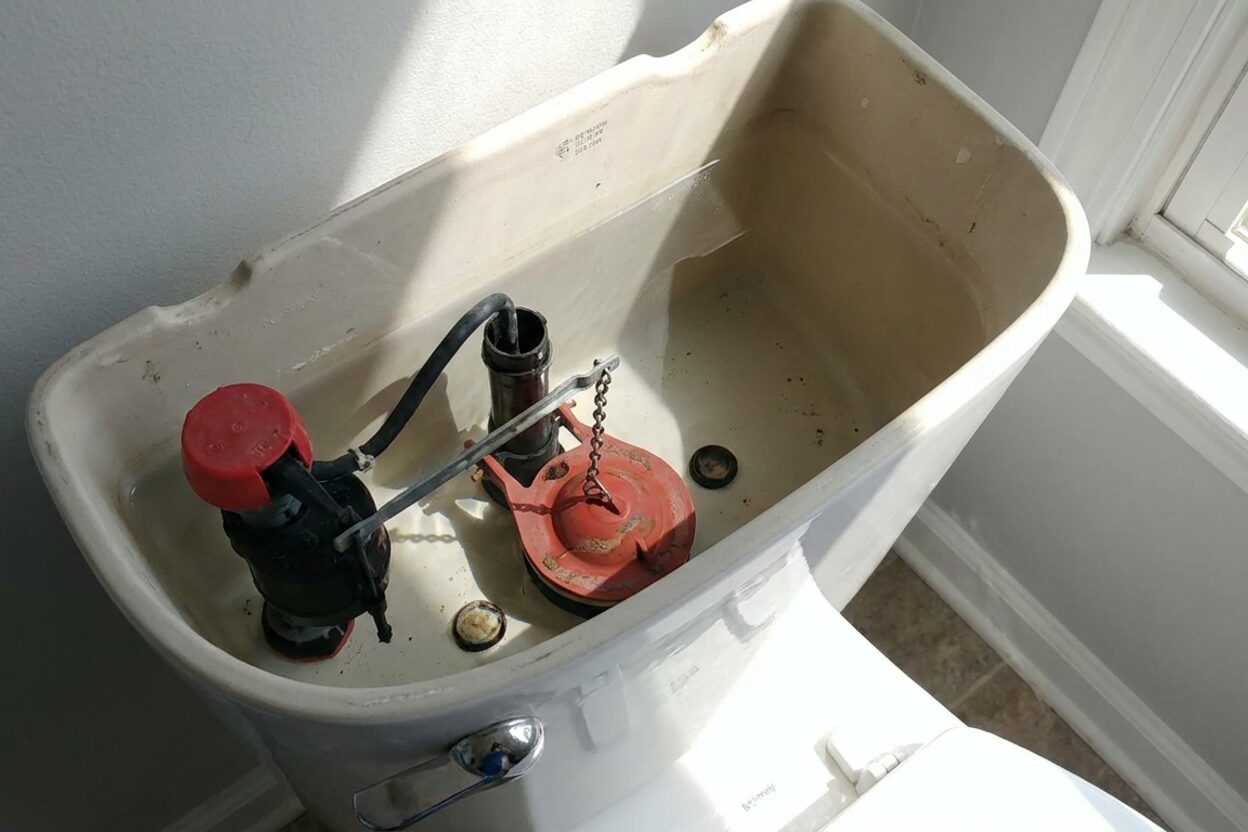
The flush handle connects to a horizontal arm (called the trip lever or handle arm) that runs inside the tank. A lift chain or lift wire hangs from that arm down to the flapper at the bottom of the tank. When you press the handle, the arm lifts the chain, which pulls up the flapper, and water rushes into the bowl. Simple as it sounds, a couple of things commonly go wrong:
- The lift chain has come unhooked or is tangled. If the handle pushes down fine but nothing happens in the bowl, this is the first thing to check. The chain may have slipped off the arm hook, gotten looped around something, or broken entirely.
- The handle nut has corroded or over-tightened. The handle attaches to the tank with a mounting nut — and critically, the mounting nut on many toilets uses left-handed (reverse) threads — meaning you turn it clockwise to loosen. However, this isn't universal: some manufacturers use standard right-hand threads. Before applying force, try both directions with light pressure to feel which way it moves freely, and check your toilet's documentation if you're unsure. Corrosion or someone tightening it the wrong way can lock it in place, making the handle feel completely seized.
- The handle arm is cracked or broken. Plastic arms (common on newer toilets) can snap at the pivot point. Metal arms corrode through over time. When the arm breaks, pressing the handle does nothing because the mechanical connection to the chain is gone.
- The chain is too long or too short. Too much slack means the flapper never lifts fully. Too little slack means the flapper can't close — and the handle may feel oddly resistant or stuck in a partially depressed position.
- Mineral buildup around the handle mount. In hard-water areas, calcium deposits can gum up the pivot point until the handle barely moves.
Before You Do Anything Else
Turn off the water supply at the shutoff valve (the angle-stop valve behind and below the toilet), flush to empty the tank, and use a sponge to mop up whatever water remains. Working in an empty tank is much easier, and it prevents any accidental flooding if you need to disconnect something.
Diagnosing the Handle Step by Step
- Lift the tank lid and set it safely aside — porcelain lids crack easily if they're bumped.
- Press the handle and watch what happens inside. Does the arm move? Does the chain lift? Does the flapper open? That observation tells you a lot. If the arm moves but the chain doesn't, the chain is disconnected. If nothing moves at all, the handle or arm is the problem.
- Check the chain. Reattach it to the arm hook if it's come loose. The chain should have just a small amount of slack — enough that the flapper seals fully when the handle is at rest, but not so much that pulling the chain can't lift the flapper all the way open. Start with a link or two of slack and adjust from there based on how your toilet flushes and whether the flapper seats properly.
- Try wiggling the handle. A handle that wobbles excessively usually means the mounting nut has loosened. On toilets with reverse (left-hand) threads — the most common configuration — tighten the nut counter-clockwise. If you're unsure of your toilet's thread direction, test gently in both directions first. Either way, just snug is enough — do not force it or you risk cracking the tank.
- Inspect the arm. Look for cracks near the pivot point or at the chain hook. If it's broken, the whole handle-and-arm assembly needs replacing.
Replacing the Handle Assembly (When Needed)
Handle assemblies are widely available at hardware stores and are largely universal in fit — most include an adjustable arm that can be trimmed to length and a nut that works with standard tank openings. When buying, look for one that specifies compatibility with your toilet brand if possible, but universal kits work on the vast majority of gravity-flush toilets.
To swap it out: unscrew the old mounting nut (again, clockwise to loosen on most toilets with reverse threads), pull the arm free, unhook the chain, and reverse the process with the new assembly. Reconnect the chain with just enough slack for the flapper to seat fully — adjust by link until the flush is complete and the flapper closes without the handle needing to be held down. Turn the water back on, and test a few flushes before declaring victory.
A Note on Mineral Buildup
If the handle is stiff rather than loose, and the arm and chain look intact, the pivot point inside the tank may be coated with mineral scale. Removing the assembly and soaking the pivot area in white vinegar for a while can free it up. If it's too far gone, a new handle assembly is inexpensive and worth the upgrade.
When to Call It Done vs. Call a Plumber
Everything described above falls solidly in DIY territory. You'd only want a plumber involved if you find a crack in the tank itself (a cracked tank can't reliably be patched and needs replacement), or if there's a more involved issue with the flush valve seat that a handle swap won't solve. For the handle specifically, there are very few scenarios that would warrant calling in a professional — it's one of the more approachable repairs in the handle, chain, and flapper category. If you open the tank and discover a crack or an unusual configuration you're not comfortable working around, that's the time to pause and consult a plumber.
For your timeline this weekend: realistically, diagnosing and fixing a handle issue takes 20–45 minutes, parts are usually on hardware store shelves same-day, and you'll have a fully working flush well before any guests show up.
 Korky 2017BP Standard 2-Inch 2X Ultra High Performance Universal Long Lasting Rubber-Easy to Install-Made in USA Toilet Flapper, 1 Count (Pack of 1), Red
View on Amazon →
Korky 2017BP Standard 2-Inch 2X Ultra High Performance Universal Long Lasting Rubber-Easy to Install-Made in USA Toilet Flapper, 1 Count (Pack of 1), Red
View on Amazon →
 Toilet Flapper Chain, Stainless Steel Toilet Handle Chain, 2 Pack Toilet Flapper Chain Replacement Kit 9.45'' Universal Toilet Chain Toilet Flush Lift Chain Adjustable Length Fits Most Toilet Flappers
View on Amazon →
Toilet Flapper Chain, Stainless Steel Toilet Handle Chain, 2 Pack Toilet Flapper Chain Replacement Kit 9.45'' Universal Toilet Chain Toilet Flush Lift Chain Adjustable Length Fits Most Toilet Flappers
View on Amazon →
 Hibbent Universal Metal Front Mount Toilet Handle Replacement Kit, Chrome
View on Amazon →
Hibbent Universal Metal Front Mount Toilet Handle Replacement Kit, Chrome
View on Amazon →

Still need help? Ask a Plumbing Expert AD
Get a personalized answer from a verified plumbing expert. Describe your issue and get step-by-step help.