
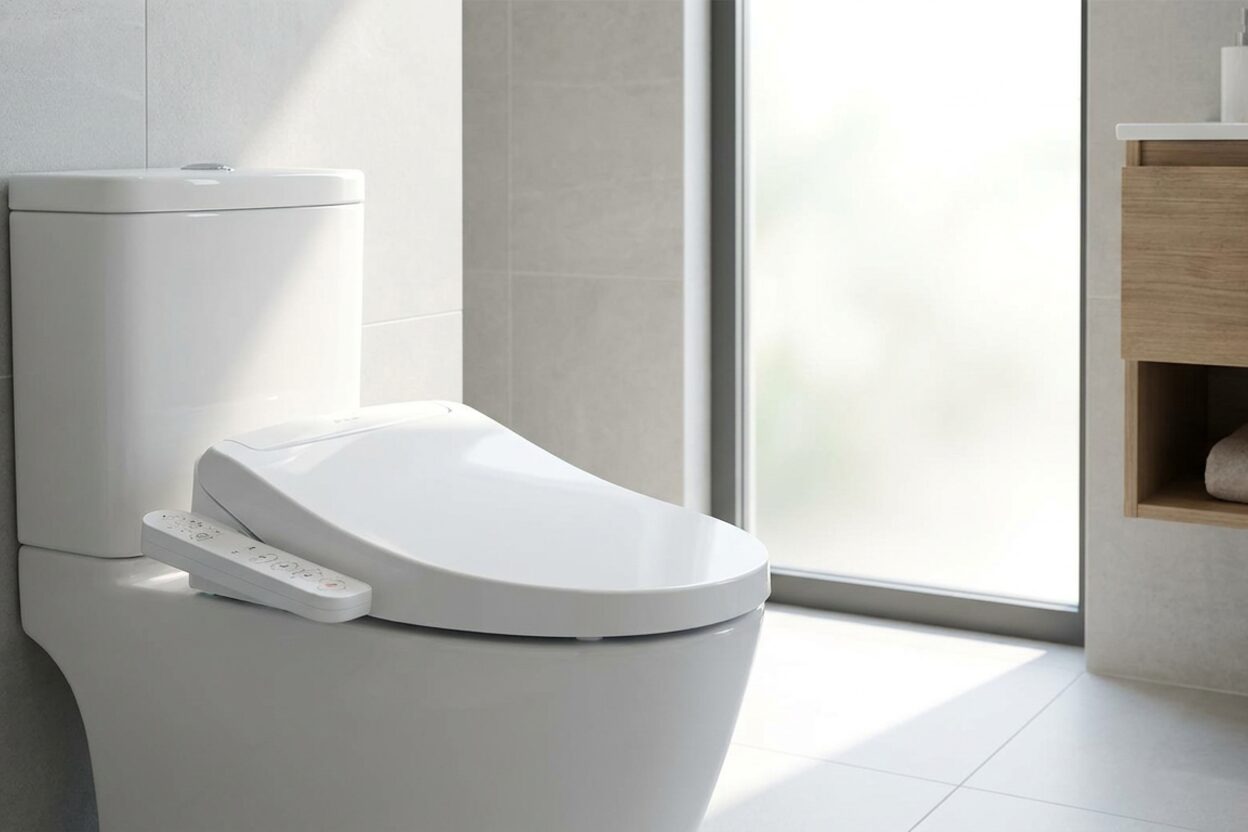
Bidet Seat Not Spraying Water? Here's Why

Why won't my bidet seat spray any water at all?
Read full question
Looked everywhere online and feel a little silly asking this, but I recently installed a bidet seat in our master bath and it's just... not spraying. We got it set up a few weeks ago and it was working fine, and now when I press the wash button nothing happens at all — no water, no noise, nothing. The toilet itself flushes and refills just fine, so I'm guessing it's something specific to the bidet?
I'm a pretty new homeowner and this is the fanciest thing we've added to the bathroom so far, so I really don't want to break it or make things worse by poking around in the wrong places. Is this something I can figure out myself, or am I already in over my head? Probably a dumb question, but where do I even start?
Quick Answer
A bidet seat that won't spray is almost always caused by one of four things: a closed or restricted water supply, a clogged nozzle, an unactivated occupied-seat sensor, or a power or control fault. Work through each possibility systematically before calling for help, since most of these are straightforward fixes that don't require tools.
Before You Touch Anything — A Few Safety Points
Good news: troubleshooting a non-spraying bidet seat carries very little physical risk, but there are a couple of things worth knowing before you start poking around. First, turn off the bidet's dedicated water supply valve (the T-shaped or lever valve on the supply line behind or beside the toilet) any time you plan to disconnect a hose or inspect a fitting. Water under line pressure can make a mess fast. Second, if your seat is electric — and most feature-rich seats are — unplug the unit from the wall outlet before touching any wiring or the internal valve area. A bidet seat running on a standard 110-V outlet is not especially dangerous in normal use, but water and loose connections in the same space call for a little caution.
Also worth saying early: the fact that your toilet flushes and refills normally is actually useful information. It tells you the main supply to the toilet is open, but it doesn't confirm that the bidet's branch line is fully open — those are two separate paths once the water gets past the shutoff.
Start Here: The Water Supply
A frequent starting point — and the easiest to check — is a shut-off valve that's partially or fully closed. Bidet seats typically tap into the toilet's supply line through a T-adapter. Locate the angle-stop valve (the oval or lever handle coming out of the wall behind the toilet), and confirm it's turned fully counter-clockwise, or in the fully open position for a lever style. Then trace the short hose that runs from that T-adapter to the bidet itself and check for:
- Kinks or pinches in the supply hose — especially if the hose was jostled during installation or a recent cleaning
- A clogged inlet filter — most bidet seats have a small mesh screen at the point where the hose connects to the unit; unscrew the hose carefully (with the supply valve closed first), remove the screen, rinse it under running water, and reinstall
- A loose connection that's letting pressure bleed off before water reaches the nozzle
If the supply valve was even slightly closed, it's possible there was just enough pressure to fill the toilet tank but not enough to power the bidet's spray mechanism. Open it fully and test before moving on.
The Occupied-Seat Sensor
This one surprises a lot of people. Nearly all electronic bidet seats include an occupied-seat sensor — a safety feature that prevents the unit from spraying while no one is sitting on it. Check your model's manual to confirm whether an occupancy sensor is present. Sensor placement varies by manufacturer — consult your seat's manual for the exact location, but it is commonly somewhere along the inner rear or side of the seat. If you're unsure, sitting fully on the seat is the most reliable way to trigger it. If the sensor isn't detecting a user, the seat simply won't activate the spray, no matter what button you press.
To rule this out, sit down fully on the seat and try the wash function again. If you'd rather test without sitting, you can try gently covering the sensor area with your hand or pressing down on that part of the seat. Also confirm that the seat is clicked firmly into its mounting bracket — if the seat has shifted even slightly, the sensor can fall out of alignment with the bowl and fail to detect occupancy correctly.
A Clogged Nozzle
If water supply is confirmed and the sensor is satisfied but you still get nothing, the spray nozzle itself may be blocked. Mineral deposits (especially in areas with hard water) and debris can clog the small holes in the nozzle tip over time. Here's how to address it:
- Check whether your seat has a self-cleaning nozzle function — many seats have a button or menu option that extends and rinses the nozzle automatically. Check your model's manual or controls panel to see if this option is available. Run it a couple of times.
- If manual cleaning is needed, extend the nozzle using the seat's controls, then gently clean the tip with warm water and a pH-neutral dish soap using a soft toothbrush. Avoid anything abrasive or acidic, which can damage the nozzle coating.
- If the nozzle won't extend at all, check for visible obstructions in the nozzle channel and consult your seat's manual for the nozzle-release procedure, which varies by model.
Power and Controls
For electric seats, a loss of power is a surprisingly easy thing to overlook. Confirm that:
- The power cord is fully seated in the wall outlet — it can work loose over time
- The outlet itself is working (plug in a phone charger or lamp to verify)
- The outlet isn't a GFCI-protected one that has tripped — look for a small reset button on the outlet face or on a nearby GFCI outlet in the bathroom and press it
- If your seat uses a remote control, check that the remote's batteries aren't dead, and try the buttons on the side panel of the seat directly if there are any
Some seats also have a control knob or pressure valve that can crack or seize, keeping the internal valve stuck in the closed position. If you notice any visible damage to the knob or valve body, that component will need to be replaced — contact the manufacturer for the correct replacement part for your model.
When to Call for Help
If you've worked through all of the above — supply valve open, filter clear, sensor triggered, nozzle clean, power confirmed, controls functioning — and the seat still won't spray, it's time to contact the manufacturer's support line. Most reputable bidet brands have troubleshooting support and warranty service, and an internal solenoid valve or control board failure is genuinely a repair best left to them. A plumber can also help if you suspect a supply-line or connection issue that you can't resolve on your own.
For more help with related bathroom plumbing questions, you're welcome to browse our bidet and washlet troubleshooting questions — you're almost certainly not the first person to run into this.


Still need help? Ask a Plumbing Expert AD
Get a personalized answer from a verified plumbing expert. Describe your issue and get step-by-step help.