
Toilet Supply Lines & Shutoff Valves
The two feet of braided hose and the small valve beneath your toilet tank do quiet, thankless work every day—until they fail. A split supply line or a seized shutoff valve can dump gallons of water onto your floor before you find the main shutoff. Swapping an aging plastic tube for a braided stainless connector, or replacing a stuck valve with a modern quarter-turn model, are among the most cost-effective repairs a homeowner can make. This guide covers exactly two products that handle those two jobs: a replacement supply line and a replacement shutoff valve.
These are not interchangeable choices—they solve different problems. The Eastman braided connector replaces the hose between the shutoff valve and the toilet tank; the SharkBite Max quarter-turn valve replaces the shutoff valve itself, which is the fitting that connects to the water supply pipe in the wall or floor. Many homeowners need only the supply line. Others discover their shutoff valve is too corroded or stiff to close reliably and need both. Before buying either, read our article on how to shut off water to just your toilet so you know exactly what you're working with before you start.
There is one situation where you should put your wallet away and call a licensed plumber instead: if the shutoff valve is fused open, if the pipe behind it is galvanized steel and shows corrosion, or if you cannot get the water to stop running even at the valve, do not force anything. Those conditions require professional tools and judgment. For everyone else, the two products below cover the most common toilet supply repairs a careful homeowner can handle in an afternoon.
At a Glance
| Product | Pick | Rating | Best for |
|---|---|---|---|
| Eastman 12-Inch Braided Toilet Connector | Best Overall | 4.6 ★ | Homeowners replacing an aging plastic or rubber supply line as routine maintenance or after a drip develops at the hose |
| SharkBite Max Quarter-Turn Shutoff Valve | Easy upgrade | 4.8 ★ | Homeowners with a functioning copper or PEX supply stub who want to replace a stuck, slow-turning, or leaking shutoff valve without soldering |
Our Picks
1. Eastman 12-Inch Braided Toilet Connector — the straightforward flood-insurance fix
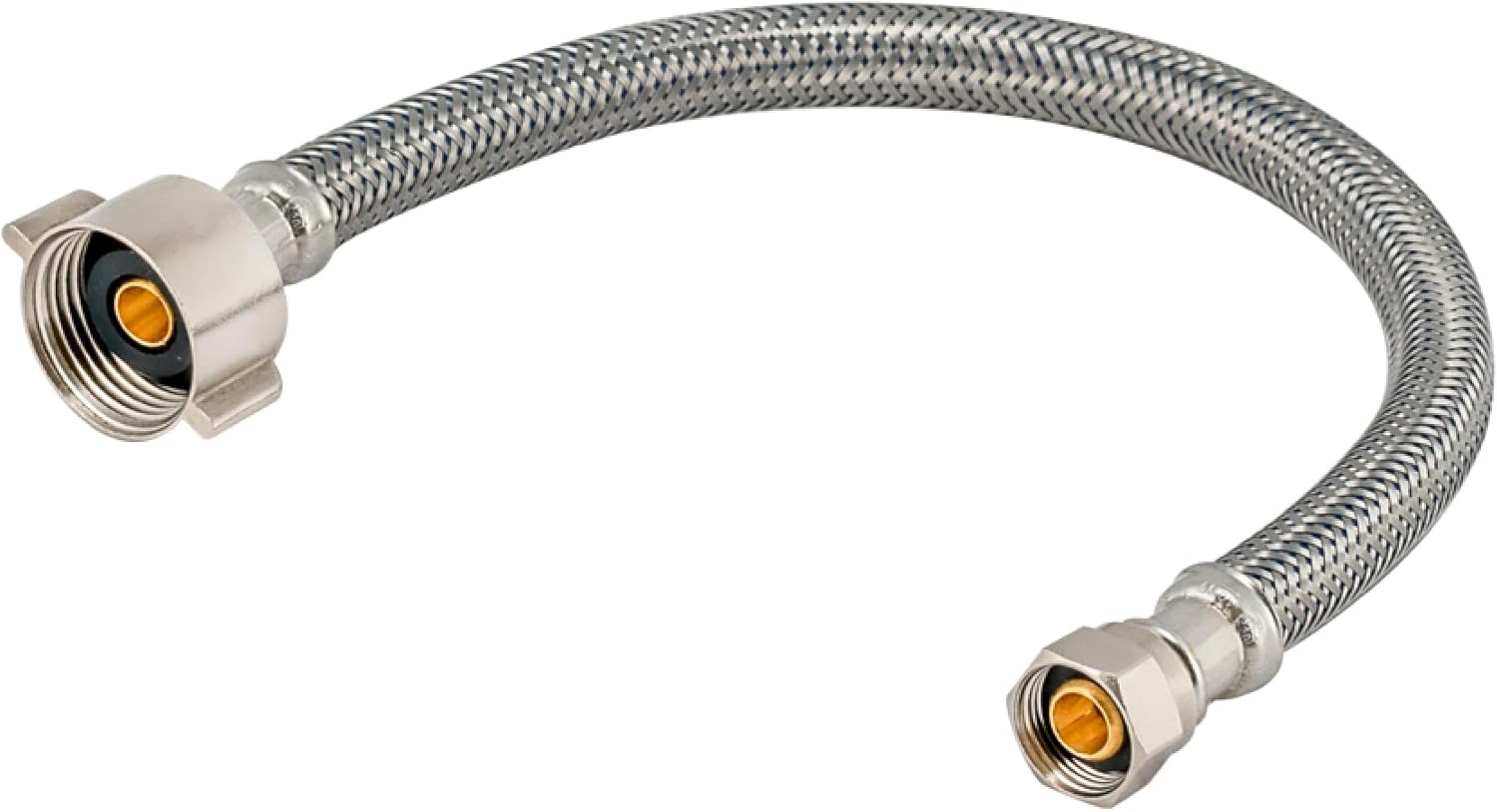
The Eastman 12-Inch Braided Toilet Connector is a stainless-steel-braided supply line designed to replace the plastic or older rubber hose between your shutoff valve and toilet tank. Braided stainless construction resists bursting and vibration far better than plain plastic tubing, making this a meaningful upgrade even on a toilet that shows no current leaks. The 12-inch length suits standard rough-in installations where the valve sits close to the wall, but measure your existing line before ordering—if your valve is positioned farther away, you will need a longer connector. The main limitation is that this product replaces only the flexible hose; if the shutoff valve itself is the source of trouble, the Eastman connector alone will not solve it.
Best for: Homeowners replacing an aging plastic or rubber supply line as routine maintenance or after a drip develops at the hose
Check price on Amazon →2. SharkBite Max Quarter-Turn Shutoff Valve — the modern valve for a stuck or outdated shutoff
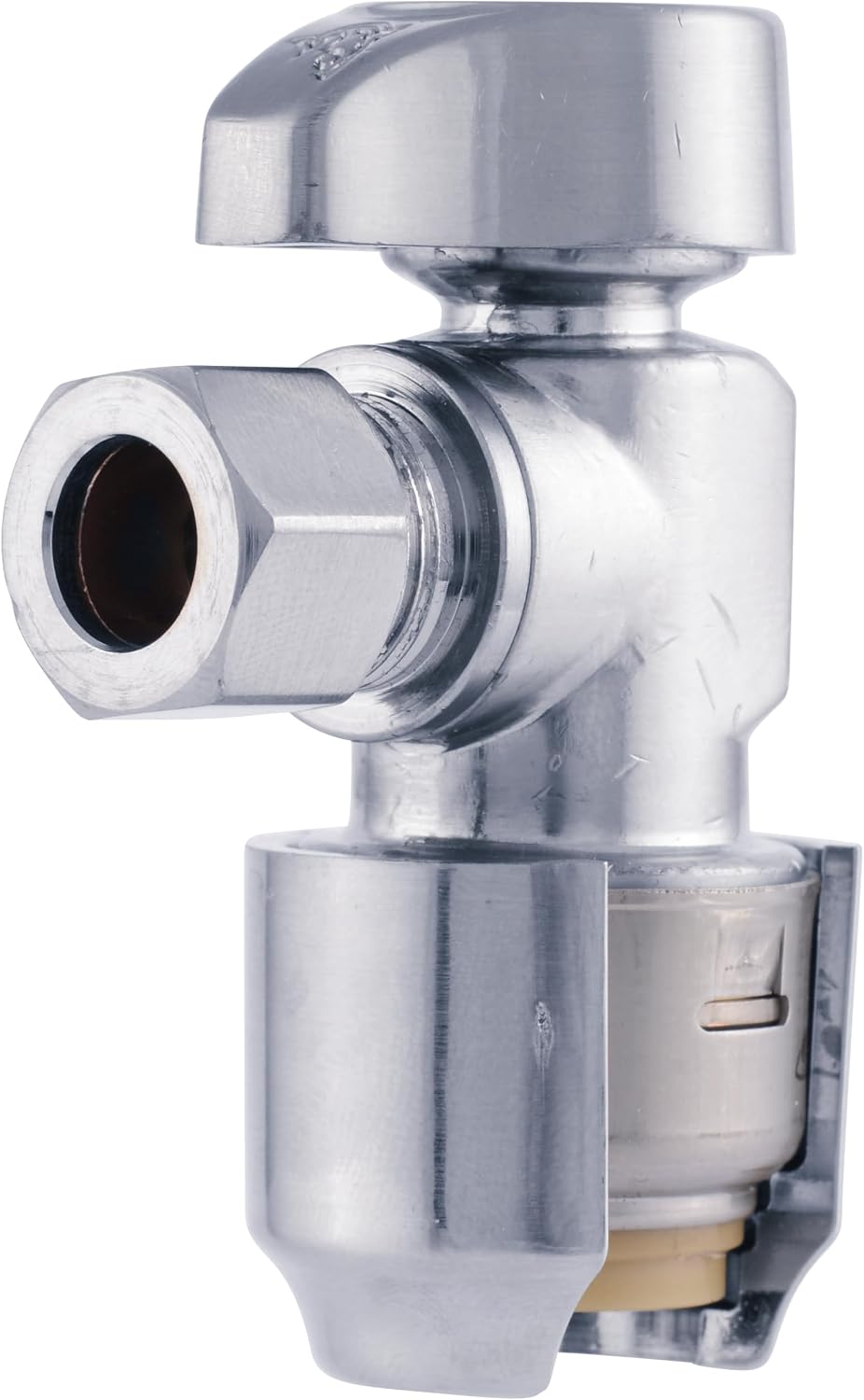
The SharkBite Max Quarter-Turn Shutoff Valve replaces a traditional multi-turn gate or globe valve with a ball valve that opens and closes with a simple 90-degree handle turn, making it far easier to shut off quickly in an emergency. Its push-to-connect design means no soldering and no compression fittings—the valve seats directly onto a clean, undamaged copper or PEX pipe stub. That convenience comes with a prerequisite: you must inspect the pipe end before committing to this route, because push-to-connect fittings require a smooth, nick-free pipe surface and a sufficient exposed length to grip. Replacing the shutoff valve requires shutting off water at the main, so this is a bigger job than swapping the supply line alone; if the existing valve is corroded or the pipe is galvanized, stop and consult a licensed plumber.
Best for: Homeowners with a functioning copper or PEX supply stub who want to replace a stuck, slow-turning, or leaking shutoff valve without soldering
Check price on Amazon →How to Choose
Start by diagnosing which component is the actual problem. Trace any moisture to its source while the surfaces are dry—sometimes what looks like a valve leak is actually the supply line fitting weeping at the tank connection, and sometimes what seems like a hose drip is the valve stem. Our article on why a toilet supply line leaks walks through that diagnostic in detail. Only once you know the source should you decide which product—or combination—you need.
If the supply line is the problem
The Eastman braided connector is the right starting point for most homeowners. Before purchasing, take two measurements: the length of the existing hose from fitting end to fitting end, and the fitting sizes at both ends. The most common configuration is a 3/8-inch compression fitting at the shutoff valve and a 7/8-inch ballcock nut at the toilet tank, but confirm this on your specific toilet before ordering. A connector that is even slightly too short will stress the fittings and invite leaks; too long and it will coil awkwardly and be difficult to tighten squarely.
If the shutoff valve is the problem
A valve that turns slowly, leaks from the stem, or will not fully stop water flow is a candidate for replacement. See our article on what to do when a shutoff valve won't turn off before deciding. If the valve is merely stiff but the pipe and surrounding area are in good condition, and your supply pipe is copper or PEX, the SharkBite Max is a practical no-solder replacement. If the pipe is galvanized steel, shows flaking rust, or the valve body appears fused to the pipe, do not attempt this repair yourself—the risk of damaging an older pipe is real, and the downstream consequences are significant.
Confirm pipe compatibility before buying push-to-connect
Push-to-connect valves like the SharkBite Max grip the outside of the pipe with internal teeth and an O-ring seal. This works reliably only on clean, round, undamaged pipe ends. Before purchasing, turn off the water at the main, remove the old valve, and inspect the stub: look for corrosion pits, out-of-round deformation, or an insufficient exposed length. If the pipe end is damaged even slightly, the fitting will not seal correctly. If you are uncertain, a compression-style valve installed by a plumber is the safer path.
Installation reminders that apply to both products
- Hand-tighten connections first to seat the threads or the ballcock nut squarely before applying any tool. Cross-threading a plastic nut and then snugging it with a wrench is how cracks happen.
- Once hand-tight, add approximately a quarter turn with a wrench—firm, not forceful. Overtightening deforms rubber washers and cracks plastic nuts, creating the very leak you are trying to prevent.
- After the work is complete, restore water pressure slowly and watch every joint, surfaces dry, for a full minute before walking away. Small weeps become visible immediately; do not rush this step.
Frequently Asked Questions
Do I need to replace the shutoff valve if I'm only replacing the supply line?
Not necessarily. If the valve closes fully, does not leak from the stem, and turns without excessive effort, it is serviceable. Replace the supply line and leave the valve in place. Exercise the valve by opening and closing it a few times while you have the water off—a valve that moves freely is one you can rely on in a future emergency.
How do I know which supply line length to buy?
Measure the existing supply line from the center of the valve fitting to the center of the tank fitting. Buy a connector that matches or is very slightly longer—never shorter. A line under tension will work the fittings loose over time. If your existing line is kinked or coiled heavily, that is a sign it was the wrong length to begin with; correct the length when you replace it.
Can I use the SharkBite Max valve on galvanized steel pipe?
No. Push-to-connect fittings are rated for copper and PEX; galvanized steel pipe has an outside diameter and a surface texture that these fittings are not designed to grip. Beyond the compatibility issue, galvanized pipe that is old enough to still be present in a toilet supply often has internal corrosion that makes the entire stub unreliable. This is a job for a licensed plumber who can evaluate and replace the pipe section if needed.
My new supply line connection is dripping slightly. Should I just tighten it more?
Stop and check before reaching for the wrench. First confirm the line is not cross-threaded—unscrew it, reseat it by hand until it turns smoothly, and then snug it a quarter turn with a wrench. If it still drips, the washer inside the fitting may be missing, misaligned, or damaged. Remove the fitting and inspect. More torque on a damaged or missing washer will crack the nut without stopping the leak. For a full diagnostic, see our article on fixing a dripping supply line connection.
Do I need a plumber for either of these installations?
Replacing the supply line is a routine homeowner repair requiring only basic hand tools and the ability to shut off the toilet's local valve. Replacing the shutoff valve is more involved—it requires shutting off water at the main, and any complication with the pipe condition moves it firmly into licensed-plumber territory. If the valve is stuck, corroded, on galvanized pipe, or if you cannot confidently shut off the main, hire a professional. Attempting to force a fused valve or work on compromised pipe risks a much larger water loss than the original problem.
This guide contains affiliate links. We may earn a small commission at no extra cost to you.