
Toilet Auger vs Plunger
A slow drain or standing water in the bowl means one thing: something is blocking the toilet's trap or drain, and you need to move it now. For most household clogs, two tools cover the full range of solutions — a flanged plunger for the first attempt and a closet auger if the plunger alone isn't enough. Understanding which to reach for, and in what order, can clear the problem in minutes without damaging the bowl or calling a plumber.
Before you buy anything, rule out one shortcut that sounds tempting but will make things worse: do not pour Drano, Liquid-Plumr, or any chemical drain cleaner into a toilet. A toilet's built-in trap holds liquid in place, so the chemical sits against the porcelain rather than moving toward the clog. The heat it generates can crack the bowl, it rarely dissolves what's actually blocking the drain, and if you plunge afterward you risk splashing caustic liquid on yourself. This is a firm rule — plunger and auger only. For a full explanation, see Can You Put Drano in a Toilet? Safe Alternatives.
There are situations where neither tool is the right answer. If more than one fixture — a second toilet, a sink, a tub — is draining slowly or backing up at the same time, the blockage is likely in the main sewer line, not the toilet itself, and a plumber should inspect it. Similarly, if the same toilet keeps clogging week after week, that pattern points to a partial obstruction or a venting problem deeper in the drain system. Buy the tools for a one-off clog; for a recurring one, see Why Does My Toilet Keep Clogging? before spending money.
At a Glance
| Product | Pick | Rating | Best for |
|---|---|---|---|
| Korky BeehiveMAX Flanged Plunger | First move | 4.5 ★ | Anyone who needs a reliable everyday toilet plunger and doesn't already own a flanged model |
| RIDGID 6-Foot Closet Auger | Next step | 4.6 ★ | Homeowners who have already plunged without success, or who want a complete two-tool clog-clearing kit from the start |
Our Picks
1. Korky BeehiveMAX Flanged Plunger — The first move for any toilet clog
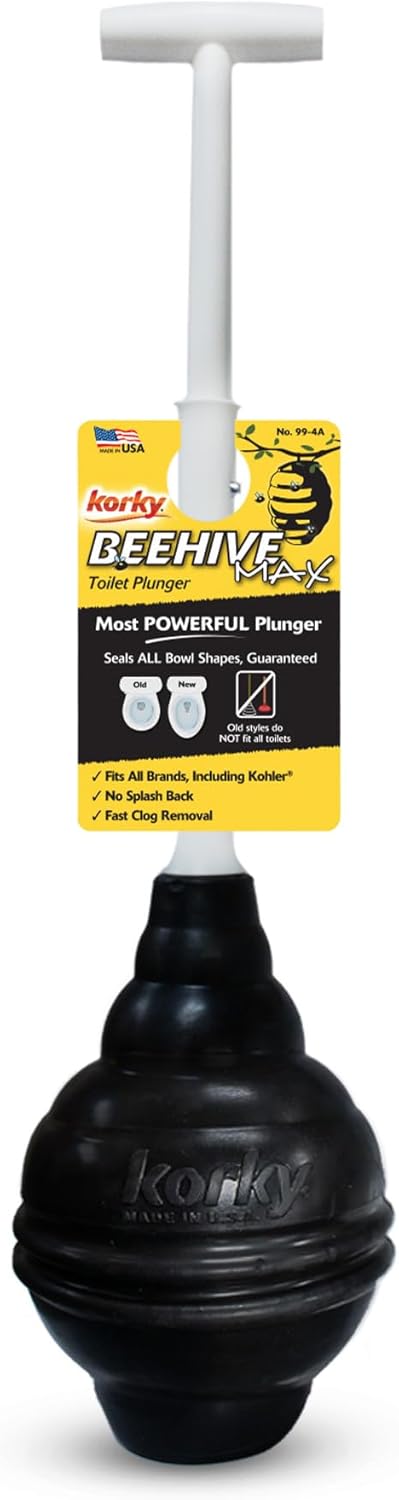
The Korky BeehiveMAX is a flanged plunger — meaning it has a fold-out rubber flange at the base of the cup that seats inside the bowl outlet and creates the airtight seal a toilet requires. A flat sink plunger cannot form that seal, so if you own only a flat plunger, it is the wrong tool for a toilet. The BeehiveMAX earns its 'First move' badge because a good plunger clears the majority of toilet clogs without any further equipment. Effective plunging is about technique as much as tool: press slowly on the first stroke to expel air from the cup, then work with a steady push-and-pull rhythm — the pull stroke matters as much as the push. One honest limitation: if an object that won't break down is lodged in the trap — a toy, a clump of so-called 'flushable' wipes — a plunger will push water around it but will not remove it.
Best for: Anyone who needs a reliable everyday toilet plunger and doesn't already own a flanged model
Check price on Amazon →2. RIDGID 6-Foot Closet Auger — The next step when plunging isn't enough
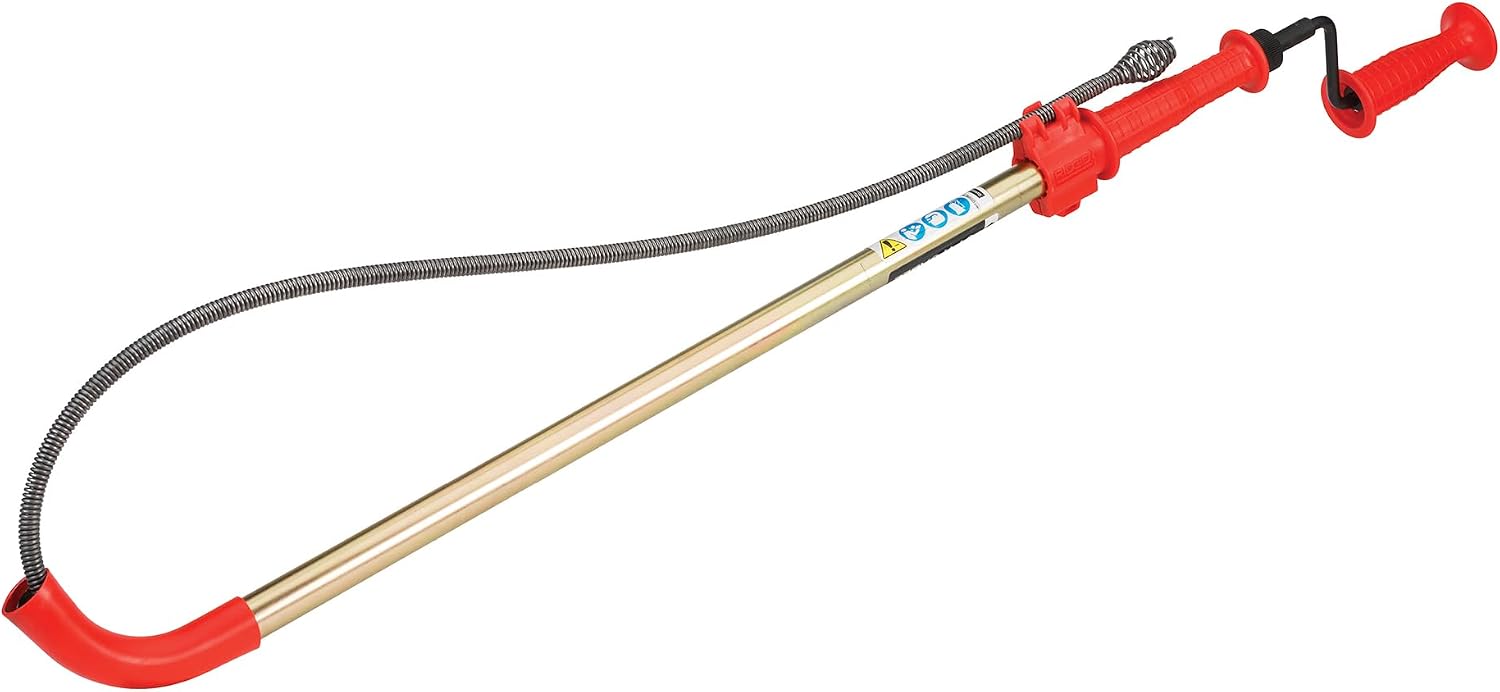
The RIDGID 6-Foot Closet Auger is a toilet-specific drain snake with a rigid bowl-guard sleeve that holds the cable away from the porcelain as you feed it into the trap. That sleeve is the critical difference between a closet auger and a standard drain snake: a straight cable run directly against a toilet bowl will leave permanent scratches, while the bowl guard prevents that contact. Six feet of cable reaches through the trap and into the drain line beyond, enough to snag or break up most obstructions that a plunger cannot shift. The auger earns its 'Next step' badge because it belongs in the rotation after plunging has failed, not before — using it first on a simple soft clog is unnecessary. Its limitation is the same as the plunger's: if a rigid foreign object is lodged tightly, the auger may hook and retrieve it or may confirm that a plumber with a camera is the next call.
Best for: Homeowners who have already plunged without success, or who want a complete two-tool clog-clearing kit from the start
Check price on Amazon →How to Choose
For most people, the decision isn't either/or — it's which one to buy first, and whether to buy both. Start with the plunger. A flanged plunger handles the large majority of toilet clogs caused by too much paper or waste, and it costs little to own. If you already have a plunger but it's the flat cup style designed for sinks, replace it: a flat plunger cannot seal a toilet's oval outlet and will not generate useful pressure no matter how hard you work it.
Start with the plunger if...
- This is your first clog in this toilet and there is no reason to suspect a foreign object.
- The water is rising slowly rather than completely blocked — a partial clog often responds quickly to plunging.
- You do not yet own any unclogging tools and want to buy the least expensive, lowest-risk option first.
Add the auger if...
- You have plunged with correct technique through several sets of strokes and the clog has not moved.
- You suspect a foreign object — a child's toy, a toothbrush, a wad of wipes — is lodged in the trap. An auger can sometimes hook and retrieve these where a plunger cannot.
- You want a complete kit so you are not making a second trip to the hardware store mid-problem.
A note on 'flushable' wipes
Wipes marketed as flushable are one of the most common causes of repeat toilet clogs. Unlike toilet paper, they do not break down reliably in a drain system. If wipes are being flushed in your household and the toilet clogs more than occasionally, stopping that habit will do more than any tool. See Why Does My Toilet Keep Clogging? for a full breakdown of repeat-clog causes.
When to call a plumber instead
Neither tool is appropriate if multiple fixtures are backing up simultaneously — that signals a main-line blockage. Likewise, if you have already retrieved or broken up an obvious clog but the toilet still drains slowly, or if the same toilet has clogged three or more times in recent months without a clear cause, a plumber's inspection will find what a tool cannot. Tools are for one-off clogs; patterns need diagnosis.
Frequently Asked Questions
Can I use a regular sink plunger on a toilet?
No. A flat cup plunger is shaped for flat sink drains and cannot seal the curved outlet at the bottom of a toilet bowl. Without a seal, you are just pushing water rather than building pressure against the clog. You need a flanged plunger — one with a soft rubber collar that folds out from inside the cup and fits into the bowl outlet. The Korky BeehiveMAX is designed specifically for this purpose.
Will a toilet auger scratch my bowl?
A toilet-specific closet auger, like the RIDGID 6-Foot Closet Auger, includes a rigid bowl-guard sleeve that keeps the cable from rubbing directly against the porcelain as it enters the trap. A standard drain snake or 'drum' snake has no such guard and will leave visible scratches. Always use a closet auger — not a generic snake — in a toilet. For step-by-step guidance, see How to Use a Toilet Auger to Clear a Clog.
Can I pour Drano or drain cleaner into the toilet to avoid plunging?
No — and this is worth being direct about. A toilet's trap retains water by design, which means a chemical drain cleaner pools there against the porcelain rather than flowing to the clog. The heat the chemical generates can crack the bowl. Beyond the damage risk, the chemical rarely reaches or dissolves a solid clog, and if you plunge after pouring it in, any splash becomes a serious skin and eye hazard. Stick to a plunger and, if needed, a closet auger.
What if I don't have a plunger at all?
There are a few techniques that can help in a pinch — hot water and dish soap is the most commonly cited — though none are as reliable as a proper flanged plunger. Our guide How to Unclog a Toilet Without a Plunger covers those options honestly, including their limitations. If the clog is at all stubborn, a plunger remains the right first tool to own.
When should I stop trying tools and call a plumber?
Call a plumber if: more than one fixture in your home is draining slowly or backing up at the same time (this points to the main sewer line, not the toilet alone); you have used both a plunger and a closet auger without clearing the clog; you know or strongly suspect a rigid object — a toy, a large wipe mass — is lodged in the trap and the auger cannot retrieve it; or the same toilet has clogged repeatedly over a short period. Repeated clogs in the same fixture often indicate a partial obstruction further down the line or a drain-venting problem that tools at the bowl level cannot fix.
This guide contains affiliate links. We may earn a small commission at no extra cost to you.