
Unused Toilet Sewer Smell: Is It a Dry Trap?

Unused toilet smells like sewer — did I make it worse?
Read full question
My apartment has a second bathroom that basically never gets used, and lately there's been a really strong sewer smell coming from it. I looked up a video on how to fix a dry trap and followed the steps — poured water down the toilet, added a little mineral oil on top to slow evaporation, the whole thing. But the smell is still there, maybe even stronger now, and I'm not sure if I did something wrong or if a dry trap isn't even the issue.
The bathroom has been sitting unused for probably a couple of months since my roommate moved out. I mentioned it to my landlord but haven't heard back, so I'm trying to figure out whether this is something I can actually solve myself before I push the issue further. Could the dry trap really be causing this, or did I miss something?
Quick Answer
Yes, a dry trap is one of the most common reasons an unused toilet produces a sewer smell — the water seal in the P-trap evaporates over time and lets sewer gas pass freely into the room. The fix is usually simple, but if the smell continues after refilling the trap, other culprits like a failed wax ring or a venting problem may be at play.
Why an Unused Toilet Goes Stale — Especially This Time of Year
Your instinct about the dry trap is correct, and it is a very common cause of sewer odor in a bathroom that is not being used regularly. Here's the quick version of why: every toilet has a built-in trap — a curved section of the porcelain bowl that holds a small reservoir of water at all times. That water plug is the only barrier between your living space and the sewer line beneath it. When nobody flushes for weeks (or months), that water slowly evaporates, the seal disappears, and sewer gas drifts straight up through the bowl and into the room.
Seasonal patterns make this noticeably worse. During drier months — or when indoor heating is running full tilt in winter — air in the apartment is less humid, which speeds up evaporation in any standing water, including trap water. Conversely, in warmer months, the temperature differential between the sewer line and indoor air can actually push odors upward more forcefully. So if your roommate moved out in autumn or early winter, you're hitting a combination of low use and conditions that drain traps faster than usual. This is a well-documented pattern in plumbing practice.
What You Did Was Right — So Why Is the Smell Still There?
Pouring water down the bowl and adding mineral oil are both legitimate approaches. Mineral oil floats on top of the water and reduces the evaporation rate, which is especially useful in a bathroom that will continue to see little use. So your technique was sound. The fact that the smell persists points to one of a few possibilities worth working through:
- The toilet bowl trap refilled, but the floor drain or sink P-trap didn't. Bathrooms typically have more than one fixture, and each one has its own trap. If there's a floor drain, a sink, or a tub in that bathroom, any one of them could have its own dry trap contributing to the smell. Pour a generous amount of water into each drain — enough to fully fill the trap curve, which typically takes at least a quart but may vary by fixture. For floor drains, pour slowly until you are confident the trap is full.
- The wax ring seal at the toilet base may be compromised. Even without any visible water leak, a deteriorated wax ring can allow sewer gas to escape around the base of the toilet. This is worth checking — get down close and sniff around the base of the toilet at floor level. If the smell is noticeably stronger there, the wax ring is a suspect.
- A venting issue. Plumbing vent pipes run up through the roof and allow sewer gases to escape outside rather than back through fixtures. If a vent pipe is fully blocked — by debris, a bird nest, or ice — it can create pressure imbalances in the drain line that may contribute to trap water loss or allow sewer gas to be pushed back toward fixtures. Vent problems more commonly show up as slow drains or gurgling sounds, but a severe blockage can affect trap integrity. This is worth mentioning to your landlord or a plumber if other causes have been ruled out.
What to Actually Check (and In What Order)
- Refill every trap in the bathroom. Flush the toilet a couple of times to fully refresh the bowl water. Run the sink and tub or shower for 30 seconds each so their P-traps refill. Pour water directly into any floor drain. Add a splash of mineral oil to each drain afterward if the fixtures will continue to sit unused.
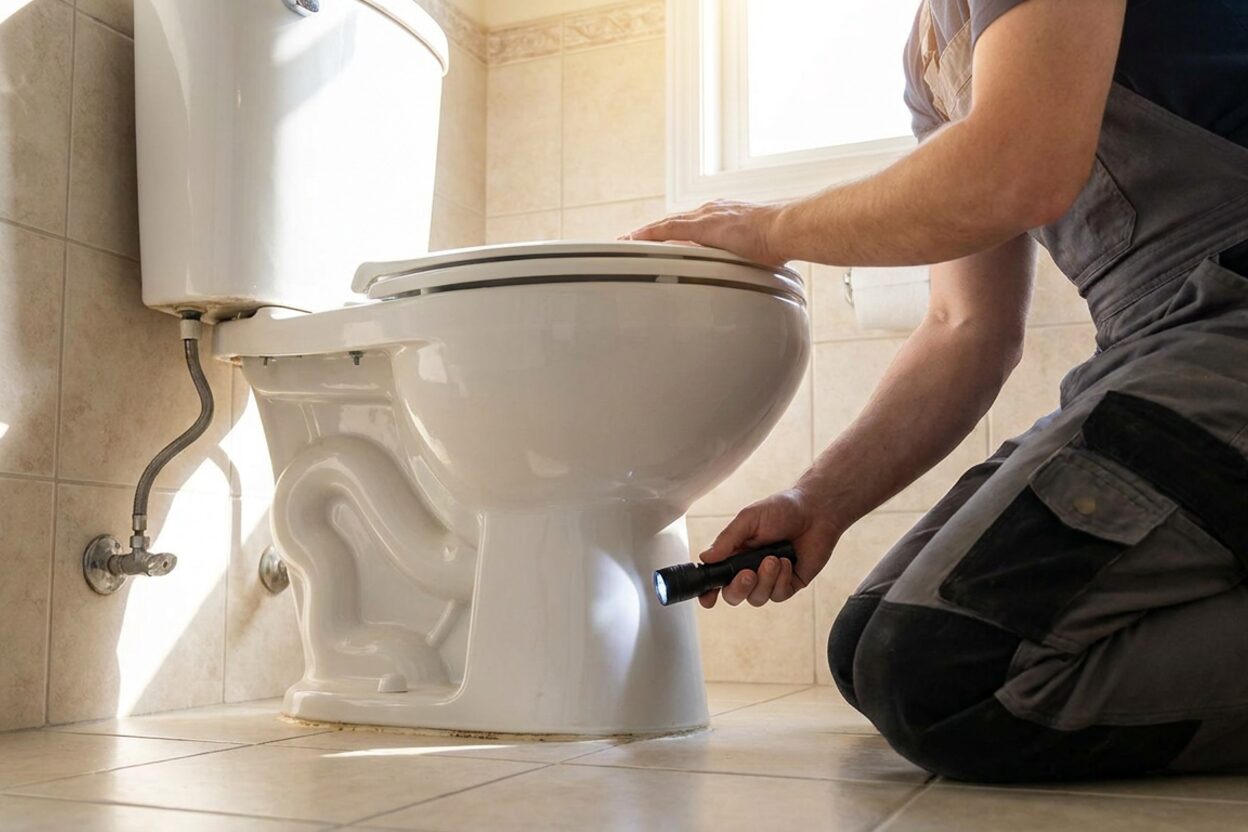
- Sniff-test the toilet base. Get close to the floor around the toilet base and take a careful whiff. A concentrated sewer odor right at floor level — particularly if it smells different or stronger than the rest of the room — suggests the wax ring isn't sealing properly anymore.
- Check the tank and supply line connections. While you're in there, make sure the supply line is tight and the toilet isn't rocking slightly when you push on it. A rocking toilet can gradually break down a wax ring seal over time.
- Wait 24 hours after refilling. Give the trap refill time to work before concluding it didn't help. Sometimes the smell needs a day to clear out of the space.
When to Push the Issue With Your Landlord
Since you're renting, it's worth knowing which issues genuinely need landlord involvement. A dry trap you can address yourself. But if the smell persists after you've refilled all the traps and confirmed no floor drain is dry, the situation may involve a broken wax ring or a venting problem — both of which are the landlord's responsibility to repair. Document the issue in writing (a text or email works) so there's a record of when you reported it.
Persistent sewer gas is worth taking seriously. At low levels it is unpleasant; at higher concentrations in an enclosed space, hydrogen sulfide can cause headaches and, in rare cases with sustained exposure in poorly ventilated areas, more serious effects. If the smell is strong, continuous, or spreading beyond that bathroom after you have refilled all the traps, ventilate the space and contact a licensed plumber to diagnose the source — do not rely solely on landlord notification timelines when the smell is severe. If you are renting, document the report in writing, but also push for a professional plumber (not just a handyman) to inspect the drain and vent stack. You can find more guidance on diagnosing and resolving bathroom odors in our sewer gas and smell troubleshooting section.
Tools and Supplies You May Need
For the basic trap-refill approach, you don't need any tools — just water and mineral oil (any inexpensive cooking-grade or hardware-grade mineral oil works). If you're investigating further:
- A flashlight to inspect the toilet base and around the floor drain
- Rubber gloves
- A bucket (if you're adding water to a floor drain that's hard to reach)
- Mineral oil or a purpose-made drain trap primer liquid
If a wax ring replacement turns out to be needed, that's a job that involves shutting off the water supply, emptying the tank and bowl, and pulling the toilet — which is manageable as a DIY task but is also a reasonable thing to hand off to a plumber, especially in a rental situation where the repair is the landlord's obligation.


Still need help? Ask a Plumbing Expert AD
Get a personalized answer from a verified plumbing expert. Describe your issue and get step-by-step help.