
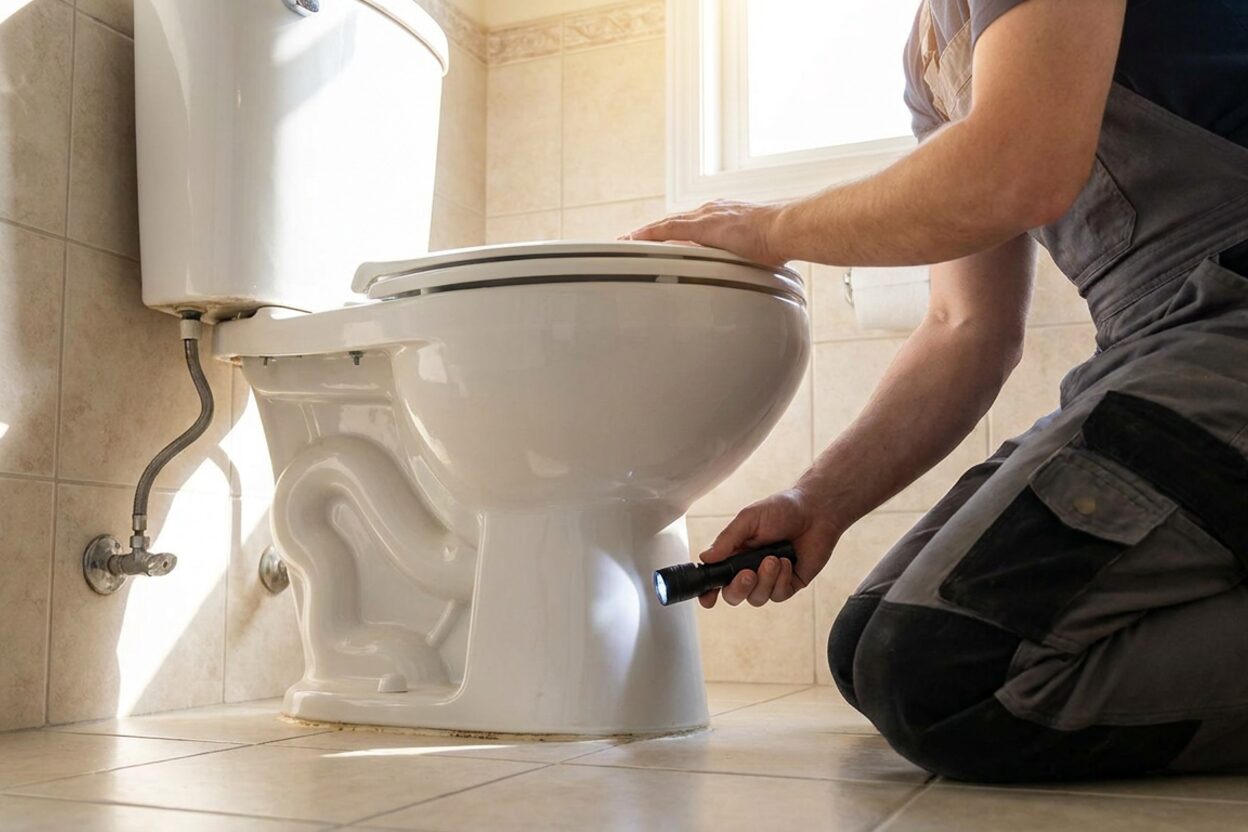
Why Your Toilet Smells Worse in the Morning

Why does my toilet smell so much worse every morning?
Read full question
During the night I keep noticing a sewer-like smell coming from the upstairs bathroom, and by morning it's noticeably stronger than it was when I went to bed. This is the third time this season I've walked into the bathroom and been hit with that rotten-egg or musty odor, and I'm done just lighting a candle and hoping it goes away. I bought this house last year and I want to actually fix the root cause, not just mask it.
The toilet itself seems to flush fine and there's no visible water on the floor. I've scrubbed the bowl, replaced the toilet brush, and even used a bathroom spray — nothing has made the morning smell go away for good. Is there something specific about overnight hours that makes it worse, or is this pointing to a plumbing problem I need to deal with right now?
Quick Answer
A toilet that smells worse in the morning typically points to a dried-out P-trap letting sewer gas in, a failing wax ring seal, or a blocked vent stack — not anything unique about nighttime itself. Addressing the cause rather than the symptom is key, and some of these fixes are urgent because sewer gas can be a health and safety concern.
First, a Quick Reality Check on the Timing
The morning timing can feel like a clue, but it's actually a bit of a red herring. Your toilet doesn't behave differently at night. What is different overnight is that the bathroom sits closed and unventilated for hours, so any sewer gas that's been seeping in slowly gets concentrated by morning. The real question isn't why it smells worse at a particular hour — it's what's allowing sewer gas into your bathroom in the first place. Let's triage that.
Address These Right Away — Don't Wait
1. A Dried-Out P-Trap (Check This First)
Every drain in your bathroom has a P-trap — a curved section of pipe that holds a small plug of water, acting as a barrier against sewer gas. If you have a floor drain, a secondary sink, or a guest bathroom toilet that doesn't get used often, that water plug can evaporate. Once it's gone, there's nothing between your living space and the sewer line.
What to do right now: Pour a generous amount of water — several cups should be enough to refill the trap — slowly down every drain in the bathroom — the sink, tub, shower, and floor drain if there is one. Add a small amount of mineral oil on top of the water in any drain that's rarely used; it slows evaporation significantly. If the smell improves noticeably within a day, a dry trap was likely part of the problem.
2. A Failing Wax Ring Seal at the Toilet Base
The wax ring seals the toilet to the floor flange beneath it. Over time — or if the toilet rocks even slightly — this seal can crack or compress unevenly, letting sewer gas escape around the base. You won't always see water, because gas escapes without leaving a visible puddle.
What to look for: Grip the toilet bowl on both sides and try to rock it gently. Any movement at all is a sign the base seal may be compromised. Also get down and sniff around the base of the toilet — if the smell is concentrated there, the wax ring is a strong suspect.
This warrants prompt attention. A wax ring replacement is a medium-difficulty DIY job (you'll need to shut off the supply at the angle-stop valve, drain the tank and bowl, disconnect the supply line, remove the toilet — Toilets are heavy and awkward — a standard unit runs 60–120 lbs. Have a second person help with the lift, keep your back straight, and set the toilet on cardboard or an old towel to protect the floor — and reseat it with a new ring). If the floor flange itself is broken or sits below the finished floor level, that's a job for a licensed plumber — don't try to patch a broken flange yourself.
3. A Cracked or Deteriorating Toilet Bowl or Tank
Hairline cracks in porcelain are easy to miss. Run your hand along the outside of the bowl, especially at the base and around the back. A cracked bowl is a call-a-plumber situation — it cannot be reliably repaired and the toilet needs replacement.
Things That Can Wait a Day or Two — But Don't Ignore Them
Blocked or Inadequate Vent Stack
Your home's drain system relies on a vent pipe (usually exiting through the roof) to equalize pressure and allow sewer gases to escape safely outside. If that vent is blocked — by leaves, debris, a bird nest, or even ice in winter — gases get pushed back down into the drains instead of venting upward. A blocked vent commonly causes gurgling sounds when you flush, slow drains across multiple fixtures, and yes, recurring sewer odors.
If you're comfortable on a roof and have someone with you for safety, you can look down the vent stack and clear visible debris. For anything deeper, a plumber with a snake or a camera is the right call. Also worth noting: if you're noticing slow drains or gurgling in multiple fixtures at once, that points toward a main line issue rather than just the toilet — and that needs professional attention promptly.
The Toilet's Internal Seal (the Flush Valve Gasket)
Inside the tank, there's a large rubber gasket where the tank meets the bowl. If this gasket has deteriorated, water — and gas — can seep past it. Lift the tank lid and inspect the gasket around the flush valve opening at the tank bottom. Soft, mushy, or discolored rubber means it needs replacement. Flush valve gaskets vary by manufacturer and flush valve size — bring the old gasket with you to the hardware store, or note your toilet's brand and model, to confirm the correct fit.
Cleaning Issues Worth Ruling Out
It's worth checking under the rim of the bowl. Mineral deposits and bacterial buildup hide in the rim jets (the small holes around the underside of the rim that direct flush water). This kind of buildup can produce a musty or sewage-adjacent odor that intensifies in a closed room overnight. A stiff toilet brush angled up under the rim, combined with a disinfecting cleaner allowed to soak, can eliminate this — but be honest with yourself: if the smell has a definite sewer-gas quality (think rotten eggs or sulfur), cleaning alone won't fix it. That's gas, not surface bacteria.
Tools and Supplies You May Need
- Adjustable wrench and channel-lock pliers
- Rubber gloves
- Sponge and bucket (to empty tank and bowl)
- New wax ring (standard or extra-thick depending on flange height)
- Replacement flush valve gasket if applicable
- Mineral oil (for rarely-used drain traps)
- Stiff toilet brush
- Disinfecting bathroom cleaner
When to Call a Plumber — No Debate
Get a professional involved if: the toilet rocks and the flange beneath it turns out to be cracked or sitting below floor level; multiple drains in your home are slow or gurgling simultaneously; the smell persists after you've reseated the toilet and checked all the traps; or you find a cracked bowl or tank. Sewer gas contains methane and hydrogen sulfide, which at high concentrations can be hazardous — another reason not to ignore a persistent smell rather than just masking it. If the odor is strong, constant, or accompanied by headaches or nausea, get fresh air and call a plumber promptly.
For more guidance on related issues, you can browse our sewer gas and bathroom odor questions — there's a lot of overlap between what causes smells and what causes other common toilet problems.
 Fluidmaster 7511 Toilet Wax Ring with Flange and Bolts
View on Amazon →
Fluidmaster 7511 Toilet Wax Ring with Flange and Bolts
View on Amazon →
 Danco HyrdroRight Water-Saving Toilet Tank Repair Kit with Dual Flush Valve, Includes Dual Push Button Handle in Chrome, (HYR460)
View on Amazon →
Danco HyrdroRight Water-Saving Toilet Tank Repair Kit with Dual Flush Valve, Includes Dual Push Button Handle in Chrome, (HYR460)
View on Amazon →

Still need help? Ask a Plumbing Expert AD
Get a personalized answer from a verified plumbing expert. Describe your issue and get step-by-step help.