
Why Does My Toilet Still Smell After Cleaning?

Toilet Still Smells Bad After a Full Cleaning — Why?
Read full question
Found myself scrubbing the toilet top to bottom tonight — bowl, tank, the whole thing — and yet there's still this persistent sour, rotten egg kind of smell coming from the bathroom. It's past midnight and I need to figure this out before guests arrive tomorrow morning. I own this home and this bathroom gets regular use, so I'm not totally surprised something's off, but cleaning didn't fix it like I expected.
I've tried the usual stuff — bleach tablets, bowl cleaner, even wiped down the outside of the base and behind the tank. The smell comes and goes a little but never fully disappears. Is there something I'm missing, or is this a sign of a bigger plumbing problem?
Quick Answer
Cleaning the bowl surface rarely removes the real source of toilet odors. The smell usually traces back to a dry or blocked P-trap, a degraded wax ring, a cracked toilet base, biofilm buildup under the rim or in hidden crevices, or sewer gas leaking past a seal. Each has a different fix, and running through them in order is the fastest way to track it down.
Cleaning the Surface Is Just the Starting Point
Here's the thing — when a toilet keeps smelling after a thorough scrub, the problem almost never lives on the porcelain itself. The cleaning you did was the right instinct, but most persistent toilet odors are coming from places a brush and bottle of cleaner simply can't reach. Let's talk through the real culprits, from the most common and easiest to fix down to the stuff that needs more attention.
The Usual Suspects (Start Here)
Buildup Under the Rim and in the Siphon Jets
The underside of the toilet rim is full of small flush holes — called siphon jets or rim holes — and they're a perfect hiding spot for bacteria, mold, and mineral deposits. If they've never been scrubbed, the smell can be significant. Grab an old toothbrush or a small rim brush, tuck it up under the lip, and scrub those holes thoroughly. A mirror can help you see what you're working with. Some people use a dental pick or a piece of wire to clear out hardened deposits from each hole. This alone can make a noticeable difference.
The Wax Seal and the Base
If the smell has a sewer-gas quality — that distinctive rotten egg or sulfur note — the wax ring at the base of your toilet is worth investigating. The wax ring creates an airtight seal between the toilet and the drain flange in the floor. When it starts to fail, sewer gas can seep up around the base. You might also notice the toilet rocking slightly, which is a red flag. Check whether the toilet feels solid or shifts at all when you sit on it. Even minor movement can break the wax seal over time. A failed wax ring means pulling and reseating the toilet — it's a moderately involved job but very doable for a DIY homeowner willing to take their time. Note: toilet bowls are heavy and awkward — have a second person help with the lift, and lay down cardboard or an old towel to protect the floor. If you go that route, you'll need a new wax ring (or a wax-free alternative), new closet bolts, and a wrench and putty knife at minimum. You'll also want a bucket and old towels or a sponge to remove residual water from the bowl and trap before moving the toilet — there will be water left even after flushing and shutting off the supply.
The P-Trap Drying Out
Every toilet has a built-in P-trap — that curved section that holds a small amount of water at all times. That water plug is what physically blocks sewer gas from traveling up through the drain. If a toilet sits unused for a while (a guest bathroom, for example), that water can evaporate and leave the trap dry. The fix is as simple as flushing the toilet a few times to refill the trap. If the smell goes away after regular use resumes, that was it.
Things People Often Miss
The Tank Interior
The inside of the toilet tank is an area that gets overlooked during most cleaning routines. Bacteria and mildew can grow on the rubber components and on the tank walls, especially if there's any iron or sulfur in your water supply. Take the lid off and take a look. If there's a slimy or dark residue, that's contributing to the smell. Before cleaning, turn off the supply valve at the wall and flush to empty the tank so you're not working around active water or risk diluting the cleaner. You can then clean the inside of the tank with a mild disinfectant — just be aware that bleach-based products can accelerate wear on the rubber flapper and seals, so use them sparingly and rinse well.
The Floor Around the Base
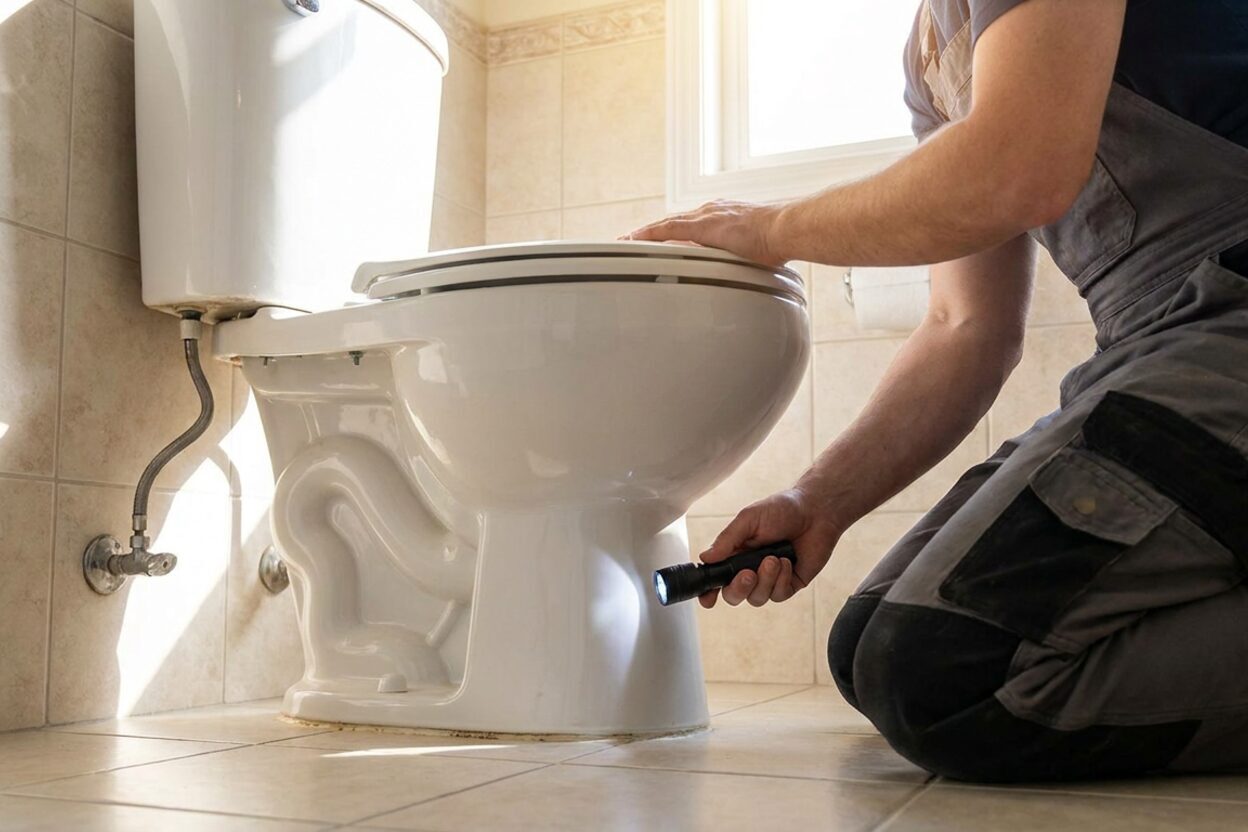
Even small gaps between the toilet base and the floor can trap urine, moisture, and organic material over time. This is especially common if the toilet has any slight movement or if there's a gap in the caulk seal. Get down close with a flashlight and look for dark staining, soft grout, or deteriorating caulk. Cleaning those crevices with an enzymatic cleaner (the kind designed to break down organic waste, not just mask odor) works better here than bleach. If the caulk is cracked or peeling, it's worth replacing it — this also helps stabilize the toilet slightly and prevents moisture from working under the base.
On the caulking question: some local plumbing codes require caulking the toilet to the floor for sanitation and stability reasons — check what your jurisdiction requires before deciding. On the other hand, some experienced plumbers intentionally leave the very back un-caulked so that if the wax ring ever fails, water shows up on the floor as a warning instead of hiding underneath and rotting the subfloor. Both approaches have merit — I'd suggest checking what your local code requires and making an informed call from there.
A Hairline Crack in the Porcelain
Less common, but worth mentioning: a hairline crack in the bowl or base can trap waste and bacteria in a way that's genuinely impossible to clean out. Run your hand along the outside of the bowl (with the surface dry) and look carefully for any discoloration or fine lines, especially near the base. Cracks in the bowl are a call-a-plumber situation — a cracked bowl needs to be replaced, not repaired.
When to Call a Plumber
Most of what's described above is manageable as a homeowner project. But if the sewer smell persists even after you've checked the wax ring, confirmed the trap has water, and cleaned every surface — or if you're noticing slow drains or gurgling sounds in other fixtures at the same time — that points toward a larger issue with your drain-waste-vent system. A faint, occasional odor usually has a simple mechanical cause — dry trap, failed seal — but a strong or persistent sewer smell that doesn't resolve after fixing the obvious sources is worth a plumber's assessment, both for comfort and because identifying the actual vent or drain issue requires a professional diagnosis.
Tools and Supplies You'll Want
- Old toothbrush or rim scrub brush
- Small mirror (for checking rim holes)
- Flashlight
- Enzymatic cleaner or mild disinfectant
- Rubber gloves
- Caulk gun and tub/tile caulk (if recaulking the base)
- Wrench and wax ring (if reseating the toilet)
Work through these in order — rim holes, tank, base/caulk, and then the wax ring — and you'll almost certainly find the source. The good news is that most toilet smell problems, once correctly identified, have a pretty straightforward fix. For more help with related issues, our toilet repair guides cover the wax ring replacement process in detail if you end up needing to go that route.


Still need help? Ask a Plumbing Expert AD
Get a personalized answer from a verified plumbing expert. Describe your issue and get step-by-step help.