
Bathroom Smells Like Sewer Gas? Here's Why

Why does my bathroom suddenly smell like sewer gas?
Read full question
Looked everywhere online but can't figure out why my main bathroom has started smelling like rotten eggs or sewer gas — it's been happening on and off for about a week now. The toilet is a Kohler two-piece and seems to flush fine, no leaks that I can see around the base. The smell is worst in the morning when we first use the bathroom, but it sometimes lingers all day.
I checked under the sink and everything looks dry, but I honestly don't know if the odor is coming from the toilet, the drain, or somewhere else entirely. My husband thinks it might be the wax ring but I'm not sure. Is there a way to track down where sewer gas is coming from without calling a plumber for every possible cause?
Quick Answer
A sewer gas smell in the bathroom is almost always caused by one of a handful of things: a dried-out P-trap, a failing or improperly seated wax ring, a cracked toilet or drain component, or a blocked vent pipe. Work through the checks below in order — most causes are inexpensive DIY fixes, but persistent odor after checking everything warrants a licensed plumber.
What You're Dealing With — and Why It Matters
Sewer gas is a mixture that can include hydrogen sulfide (the rotten-egg odor), methane, ammonia, and other compounds from decomposing waste. At low concentrations it's mostly a nuisance, but at higher concentrations it can cause headaches, dizziness, or — in an enclosed, unventilated space over time — more serious health effects. The good news is that the smell itself is your early-warning system, and tracking it down is usually straightforward if you go room-by-room and fixture-by-fixture.
Safety first: If the smell is overwhelming, you notice it throughout multiple rooms, or anyone in the home feels dizzy or nauseous, ventilate the house immediately (open windows and doors), leave, and call a licensed plumber or — if you suspect a broken sewer line or cannot rule out a natural gas source — your local fire department before re-entering. Do not call your gas utility for a sewer odor; they respond to natural gas supply leaks, not drain system issues.
A strong, sudden onset of sewer gas most often traces back to a dry trap or a recently disturbed wax ring — both covered in the steps below. If you work through all the steps and the smell persists, or if you notice sewage backing up into fixtures, that warrants a plumber visit to check the drain and vent lines.
Tools and Supplies to Have Ready
- Flashlight
- Rubber gloves
- A bucket or pitcher of water
- Plumber's tape (Teflon tape)
- Replacement P-trap (measure your drain pipe diameter before purchasing — 1-1/4" and 1-1/2" are the most common bathroom sizes, but verify yours)
- Wax ring kit with closet bolts (if the toilet needs reseating)
- Adjustable pliers or channel-locks
- Non-toxic, non-foaming plumber's drain test dye (optional but helpful)
Step-by-Step: Finding the Source
Start With the P-Traps
Every drain in your bathroom — the sink, shower, bathtub, and floor drain — has a P-trap: a curved section of pipe that holds a small amount of water. That water plug is what physically blocks sewer gas from drifting back up into the room. If a fixture hasn't been used for a while (a guest bath, a floor drain, a secondary sink), the water in the trap can simply evaporate.
The fix: Run water in every fixture for 30–60 seconds. For a floor drain you rarely use, pour a full bucket of water down it slowly. If the smell clears within a day or two, a dry trap was your culprit. Adding a small amount of mineral oil on top of the water in infrequently used drains can slow evaporation and extend the seal.
Check the Toilet Base and Wax Ring
The wax ring between the toilet flange and the toilet horn creates an airtight, watertight seal. When it fails, dries out, or was never seated properly, sewer gas can escape around the base of the toilet — even when there's no visible water leak. Rock the toilet gently side to side. Any noticeable movement — even slight — suggests the closet bolts may have loosened or the wax ring may have been compromised and is worth investigating.
Also look closely at the base. A persistent slight dampness or discoloration on the floor after flushing — not just condensation — points toward a wax ring or flange issue. See our guides on wax ring and flange repairs if you suspect this is the cause. Reseating the toilet with a new wax ring is a medium-difficulty DIY job, but if the flange itself is cracked or sitting below the finished floor level, call a plumber — that's not a condition a new wax ring alone will reliably fix.
Inspect the Toilet Tank and Bowl for Cracks
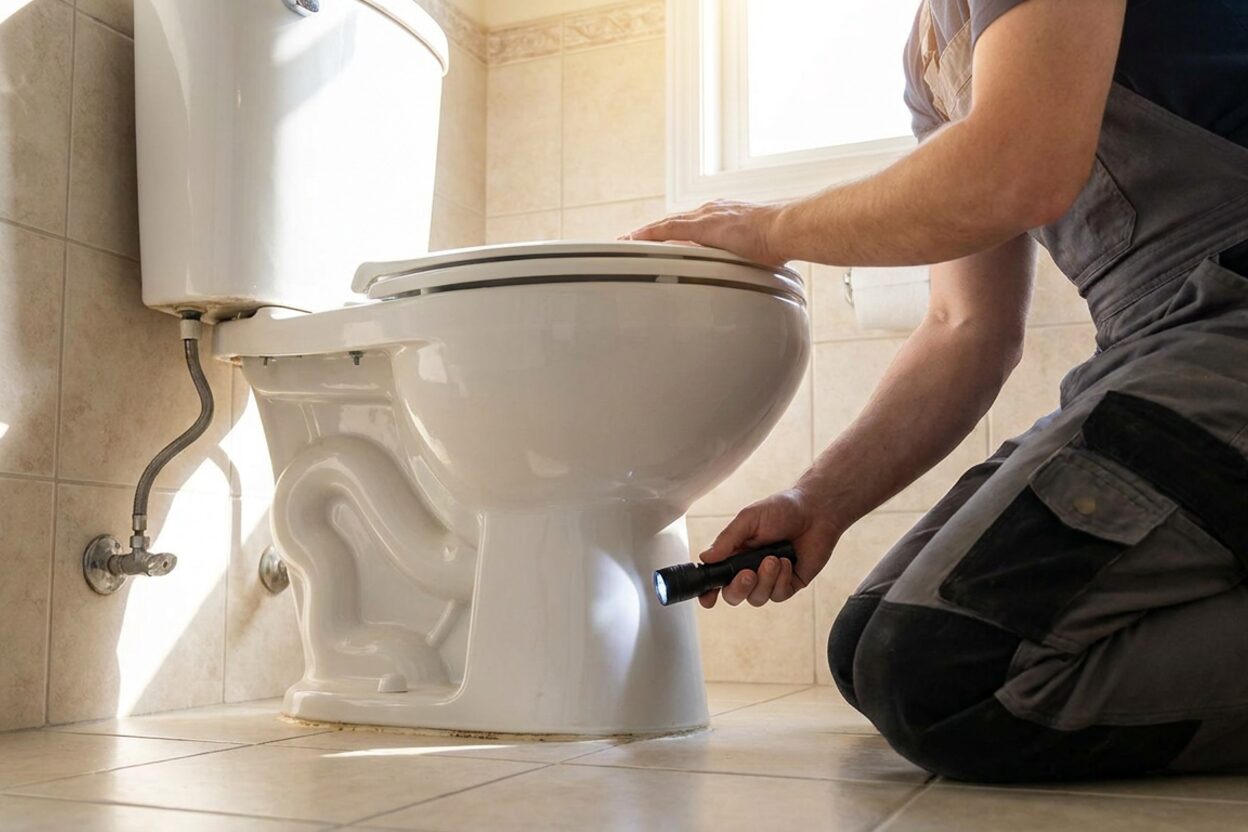
Hairline cracks in the porcelain — especially near the base or along the bowl — can let sewer gas seep out. Run your hand slowly around the outside of the base and the lower bowl with the light on. Even a crack you can barely see can be enough. A cracked bowl or tank is a replace-the-toilet situation; porcelain repairs are not a reliable long-term fix.
Look at the Supply Line, Tank Bolts, and Flush Valve
While you're near the toilet, check that the supply line connections are snug and that there's no moisture around the tank-to-bowl gasket. A degraded flush valve gasket or tank-to-bowl gasket won't directly cause a sewer smell, but water pooling at the base from an internal leak can accelerate the breakdown of the wax ring seal over time.
Examine Sink and Shower Drain Connections
Pull out the sink pop-up stopper and shine a flashlight down the drain. Look for visible gaps around the drain flange, missing putty, or a deteriorated rubber gasket. The same goes for the shower drain cover — remove it and check that the rubber seal beneath is intact and seated properly. Gaps here are less common as a sewer gas source but do occur, particularly in older bathrooms.
Check the Toilet Vent Pipe
Your plumbing system relies on a vent stack — typically a pipe that exits through the roof — to allow air into the drain lines so waste flows freely and sewer gas has an escape route out of the house rather than back through your fixtures. If a vent pipe is blocked (leaves, a bird's nest, ice in cold climates, or debris), negative pressure pulls gas back down through the traps.
Signs of a blocked vent include: gurgling sounds from the toilet or drains when another fixture is used, slow drains that aren't caused by a clog, and a sewer smell that doesn't go away after addressing everything else. Clearing a roof vent is possible DIY territory if you're comfortable on a roof — a garden hose pushed into the vent from the top can dislodge a soft blockage. If you're not comfortable on the roof or the blockage is deep in the line, a plumber with a drain camera can locate and clear it safely.
Test for Hidden Leaks With Dye or Smoke
If you've worked through all the above and still can't locate the source, a non-toxic drain dye tablet dropped into the toilet tank (or into a drain) can help trace where water and gas are escaping. Professional plumbers sometimes use a smoke test — pressurizing the drain system with non-toxic smoke to reveal any gaps or cracks — which is particularly effective for pinpointing hard-to-find sources. This is a service a plumber performs and is worth the visit if the odor persists.
When to Call a Plumber
Call a plumber if: the smell persists after reseating the toilet and confirming the traps are full; multiple fixtures in the house are backing up or gurgling simultaneously (this points to the main sewer line, not one fixture); you suspect a blocked or damaged vent stack you can't safely access; or any part of the job reveals a cracked flange sitting below the floor level. These aren't situations where more DIY work is likely to solve the underlying problem, and persistent sewer gas is worth getting properly diagnosed. For more bathroom plumbing troubleshooting, browse our toilet repair guides for related topics.


Still need help? Ask a Plumbing Expert AD
Get a personalized answer from a verified plumbing expert. Describe your issue and get step-by-step help.