
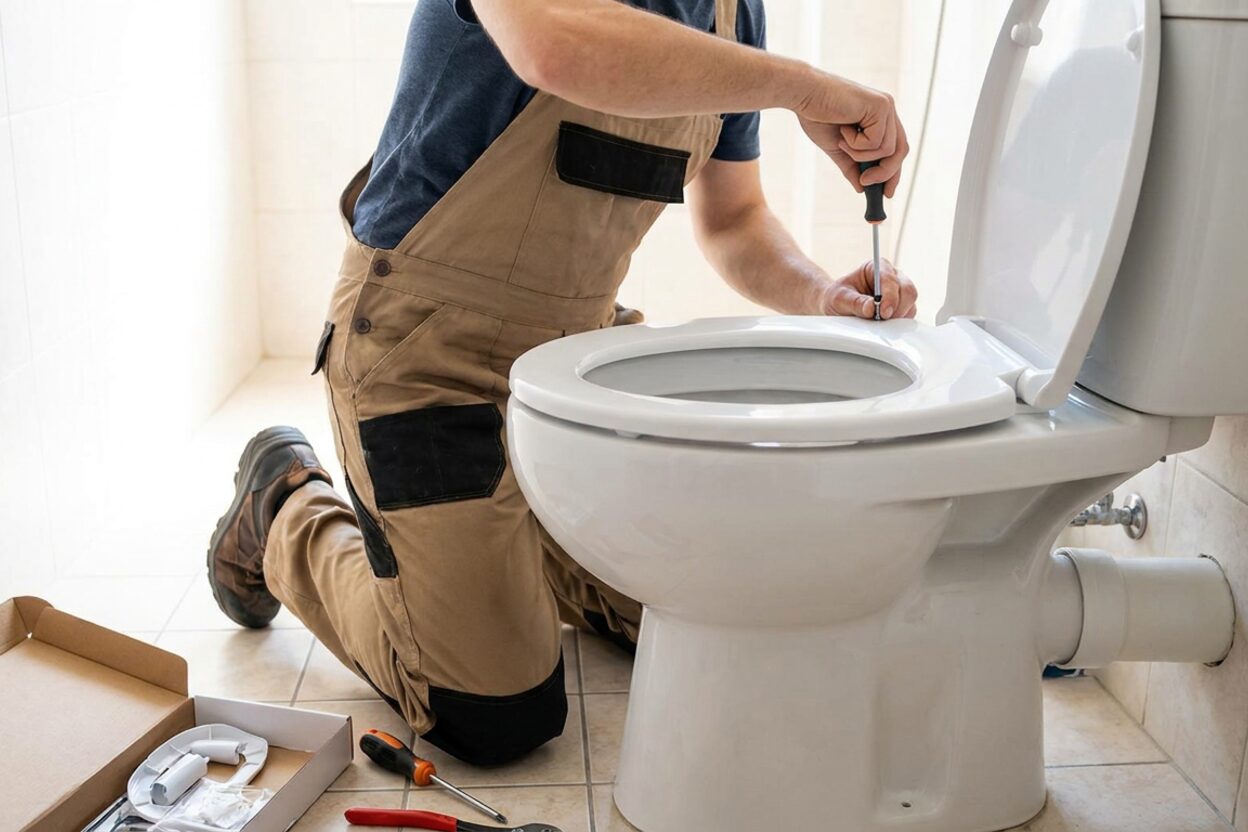
Why Your Toilet Seat Keeps Coming Loose (and How to Fix It)

Why does the toilet seat at my vacation home keep loosening?
Read full question
My vacation property came with a toilet seat that was clearly never maintained properly by the previous owner — it wobbles side to side every time anyone sits on it, and the hinge bolts underneath seem to work themselves loose within days of me tightening them. I noticed it during my first walkthrough after closing and assumed it would be a simple fix, but no matter how snug I get those bolts, the seat starts rocking again within a week or two.
I'm only at the property a few times a year, so I can't keep running back to retighten everything. Is there something structurally wrong with the hinges, or am I missing something about how these are supposed to be secured? I'd love a fix that actually holds up between visits rather than a band-aid that comes loose again by the time I return.
Quick Answer
A toilet seat that repeatedly comes loose is almost always caused by worn hinge hardware, the wrong seat size, or bolts that were never secured with a locking mechanism. Tightening alone rarely holds long-term — the real fix involves replacing worn hinges, using nylon locking nuts or purpose-built anchor systems, and choosing a seat sized correctly for your bowl. With the right approach, a properly fitted seat should stay firm for years.
What's Actually Going On
A toilet seat that keeps loosening isn't really a mystery — it's almost always one of three things: the hinge hardware itself is worn out, the seat doesn't fit the bowl correctly, or the bolts were never secured in a way that resists the rotational stress of daily use. Repeated tightening without addressing the root cause is a short-term fix at best. The good news is that once you understand what's driving the wobble, the actual repair is straightforward and the right materials will keep it in place long-term — which matters a lot when you're not around to check on it regularly.
The Most Common Culprits
Worn or Cheap Hinge Hardware
Many builder-grade and older toilet seats use plastic hinge posts and simple bolt-and-nut assemblies. Over time, the plastic posts compress and deform slightly under load, and standard nuts — especially plastic ones — back off with repeated movement. If the seat came with the house and hasn't been replaced, the hinges themselves may simply be past their useful life. Replacing the entire seat (hinges included) is often more practical than trying to retrofit better hardware onto a worn set.
Seat-to-Bowl Mismatch
Toilet bowls come in two standard shapes: round and elongated. Round bowls are typically shorter (often in the 16–17 inch range) and elongated bowls longer (often 18–19 inches), but dimensions vary by manufacturer — measure yours rather than relying on these figures alone. To measure, run a tape from the center of the seat-bolt holes at the back of the bowl to the front outer edge of the rim. Match the seat label (round or elongated) to your bowl shape before purchasing. If the previous owner swapped in a seat that doesn't match the bowl, no amount of tightening will give you a solid feel.
No Locking Mechanism on the Fasteners
Standard nut-and-bolt toilet seat fasteners have no inherent resistance to loosening. Every time someone sits down and shifts their weight, the hinge pivots slightly, and over hundreds of uses the nut walks backward. Seats designed to stay put use one of several locking strategies: nylon insert lock nuts (often called nyloc nuts), external tooth lock washers, or purpose-built seat-anchor systems with a top-tighten design that lets you cinch from above without needing access underneath.
How to Fix It Properly
What You'll Need
- Adjustable wrench or pliers (with a cloth or tape to protect the porcelain)
- Flathead screwdriver
- Replacement toilet seat (correct shape for your bowl)
- Nylon locking nuts or a seat with a built-in locking anchor system
- Rubber or neoprene washers (if not included with the seat)
Step-by-Step
- Remove the old seat. Flip up the bolt covers at the back of the seat, unscrew the top nuts (or bolts, depending on the style), and lift the seat free. Some older seats have plastic nuts underneath the bowl rim — use pliers, protecting the porcelain finish with a cloth wrap.
- Clean the mounting area. Wipe away any mineral deposits or grime around the bolt holes on the rim. A clean, flat seating surface helps the new hardware sit level.
- Verify the bowl shape before buying. Measure the bowl length and note whether the front is rounded or tapered to an oval point. Buy a seat labeled to match.
- Install with locking hardware. Thread the new bolts through the hinge and down through the bowl holes. Place a rubber washer against the underside of the rim before threading on the nut — this prevents the nut from spinning freely on a smooth surface. Tighten to snug by hand, then a small additional turn — by feel, not by a fixed angle. Stop as soon as resistance firms up. Do not overtighten: porcelain can crack under excessive clamping force, and the goal is firm compression against the washer, not maximum torque.
- Use nylon lock nuts. If the seat didn't come with them, source nylon insert lock nuts in the correct thread size — check the bolt diameter and thread pitch on your existing or new seat hardware before buying, as sizes vary by manufacturer and seat style. These resist backing off under repeated movement without needing to be cranked down hard.
- Test before finishing. Sit on the seat and shift your weight side to side. There should be no rock or lateral play. If it moves, recheck that the seat shape matches the bowl and that both nuts are evenly tightened.
Making the Fix Last — Prevention for Vacation Properties
For a home you visit infrequently, durability matters more than it does in a daily-use household. Here's what actually keeps a toilet seat in place over the long haul:
Choose a Seat with a Top-Tighten or Quick-Release Anchor System
Several manufacturers offer seats with mounting systems that anchor from the top of the rim rather than relying on a nut underneath. These designs use a locking collar that you tighten with a hand tool from above, and many include a quick-release hinge for cleaning. These designs can hold more reliably than traditional bolt-and-nut assemblies in everyday use, because the locking collar engages the seat post mechanically rather than relying on thread friction alone — though results vary by product and installation quality. Look for this feature when choosing a replacement — it's a meaningful upgrade from a standard set.
Avoid Cleaners That Degrade Rubber and Plastic
Harsh chemical bowl cleaners and bleach tablets in the tank can accelerate the degradation of the rubber washers that sit between the seat hardware and the porcelain. Softened or deteriorated washers lose their grip, contributing to movement over time. If you use in-tank tablets at a vacation property, look for products labeled as safe for toilet seals and rubber components, and avoid heavily chlorinated or bleach-based formulations. Check the product label for compatibility notes, and plan to inspect seat hardware and internal tank parts during annual visits.
Annual Check During Property Visits
Make tightening the seat hardware part of your standard walk-through when you open the property each season. A quick check takes less than two minutes — flip the bolt covers, verify the nuts haven't moved, and reseat if needed. Catching minor loosening early prevents the kind of progressive wear that eventually strips threads or cracks a hinge post.
Consider Stainless Steel Hardware
Plastic bolt-and-nut sets are standard on budget seats, but they're vulnerable to slow creep under load. If you're buying a replacement seat and want it to last, look for one that includes stainless steel or metal hinge hardware. Metal fasteners hold thread engagement better than plastic and resist the minor deformation that causes loosening over time — worth the modest upgrade for a property where you can't do monthly checks.
For more on toilet hardware repairs and maintenance, browse our toilet seat and hinge repair guides — they cover everything from cracked lids to hinge replacement on specialty seats.
 KOHLER 20110-0 Brevia, Slow Close Toilet Seat, Elongated Toilet Seat, Grip-Tight Bumpers Quick-Attach Hardware, White
View on Amazon →
KOHLER 20110-0 Brevia, Slow Close Toilet Seat, Elongated Toilet Seat, Grip-Tight Bumpers Quick-Attach Hardware, White
View on Amazon →
 Aünsffer Toilet Seat Round Soft Close16.5'', Toilet Lid Slow Close Quiet No Slam, Easy Installation & Release,Safe PP Material Easy Clean, Comfortable Ergonomic Design, 2 Years Support, White Plastic
View on Amazon →
Aünsffer Toilet Seat Round Soft Close16.5'', Toilet Lid Slow Close Quiet No Slam, Easy Installation & Release,Safe PP Material Easy Clean, Comfortable Ergonomic Design, 2 Years Support, White Plastic
View on Amazon →

Still need help? Ask a Plumbing Expert AD
Get a personalized answer from a verified plumbing expert. Describe your issue and get step-by-step help.