
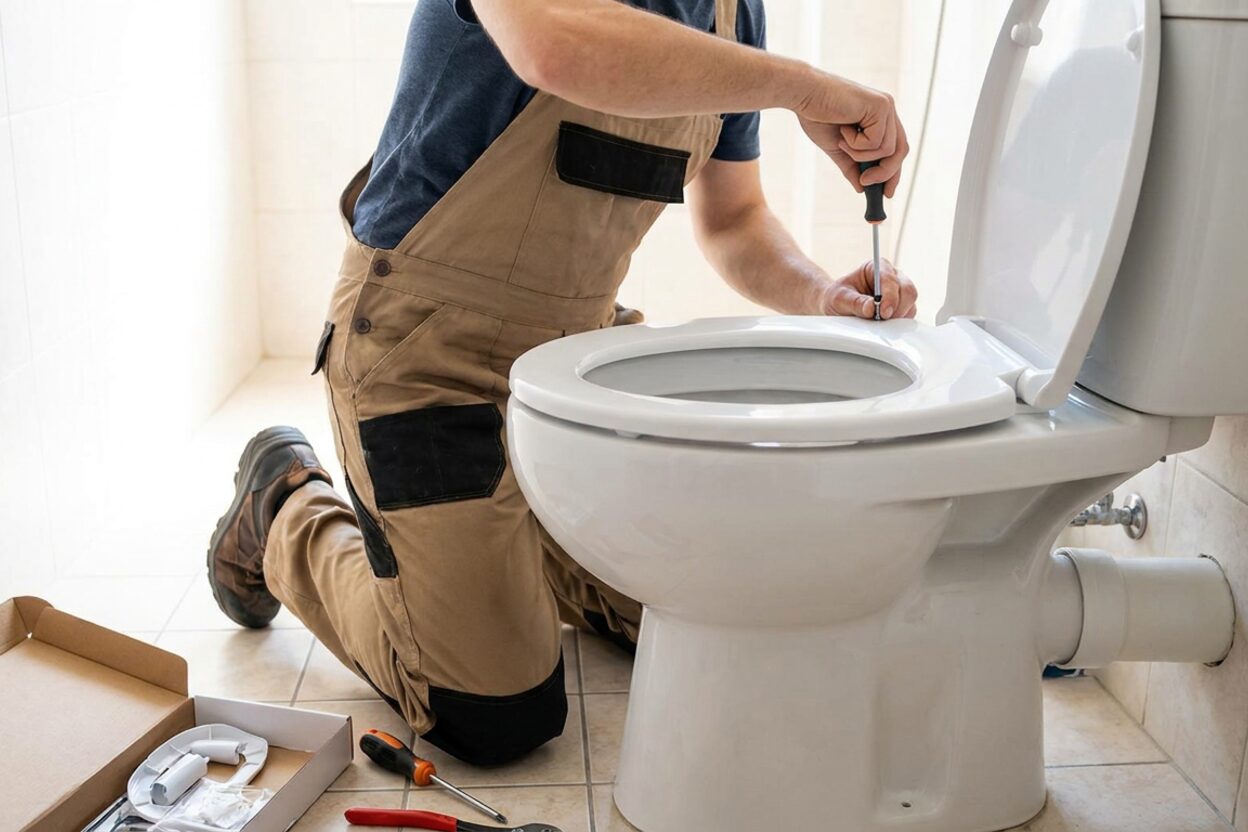
How to Measure a Toilet Seat for Replacement

Is a loose toilet seat dangerous with kids in the house?
Read full question
Three of my kids share the upstairs bathroom, and the toilet seat has been wobbling and sliding around every time someone sits on it. I keep worrying one of them is going to slip off and hurt themselves, so I want to replace it as soon as possible. The problem is I have no idea what size to buy — do all toilet seats fit all toilets, or do I need to measure mine first? I don't want to make a trip to the hardware store and grab the wrong one.
Quick Answer
Toilet seats are not universal, so you'll need to measure yours before buying a replacement. The key measurements are the bowl length (round or elongated), the width at the widest point, and the distance between the two hinge bolt holes at the back. Most seats are either round (about 16–17 inches long) or elongated (about 18–19 inches long), and bolt hole spacing is almost always standardized at roughly 5.5 inches apart — but always confirm before you shop.
Good News: No Tools Required to Measure — Just a Tape Measure
A wobbly, sliding toilet seat is annoying and worth fixing promptly — especially if young children use it. The reassuring part is that measuring for a replacement seat is one of the simplest DIY tasks around the toilet. You just need a flexible measuring tape (or even a rigid ruler), something to jot numbers down on, and about five minutes.
Seats are not one-size-fits-all. The two most common shapes — round and elongated — look similar at a glance but differ enough in length that putting the wrong shape on your bowl results in a seat that overhangs the front or doesn't cover the bowl properly. Taking three quick measurements before you shop means you'll get it right on the first trip.
Your Measurement Checklist
Work through each of these in order. Write each number down as you go.
- ☐ Bolt hole spacing (width between hinge posts)
At the very back of your toilet bowl, you'll see two holes where the seat's hinge bolts attach. Measure the distance from the center of one hole to the center of the other. Write this number down — while many replacement seats are designed around a common spacing, older toilets, non-standard bowls, and specialty designs vary, so your actual measurement is what matters. - ☐ Bowl length (front to back)
This is the measurement that determines whether you need a round or elongated seat. Place your tape at the very front center of the bowl rim (not the tank side — the front, open side) and measure back to the center point between the two bolt holes. A measurement in the range of roughly 16–17 inches often indicates a round bowl; roughly 18–19 inches often indicates an elongated bowl — but these are general guides, not hard cutoffs. Bowls near the middle of that range can be ambiguous, so compare your measurement against the seat manufacturer's listed dimensions on the packaging rather than relying on the label alone. - ☐ Bowl width at the widest point
Measure straight across the bowl at its widest spot, which is usually somewhere in the middle third of the bowl. This is more of a confirming measurement — the length and bolt spacing are the critical ones — but it's useful to have if you're looking at a specialty or comfort-height toilet seat, or if you're considering a seat with extra side padding. - ☐ Note the bowl shape visually
Stand directly over the bowl and look straight down. A round bowl looks nearly circular. An elongated bowl has a noticeably oval, stretched shape toward the front. This visual check should match your length measurement and can serve as a quick double-check in the store if you're eyeballing a display model. - ☐ Check the hinge style on the old seat (optional but helpful)
While you have the old seat removed (or before you do), look at how the hinges attach. Most modern seats use a top-tighten bolt with a plastic nut underneath, but some older toilets have a slightly wider or narrower mounting setup. If the old seat's hinge hardware is in good shape, it can give you a reference point when comparing replacement hinge kits at the store.
Round vs. Elongated: A Quick Reference
If your measurements land squarely in one camp or the other, the choice is easy. But here's what each label means in plain terms:
- Round seats are more common in smaller bathrooms and older homes. They're typically more compact and can cost a bit less in the basic lines.
- Elongated seats are found on most newer toilets and are often considered more comfortable for adults. Many manufacturers now make elongated seats that fit round bowls (marketed as a space-saving elongated shape) — these are a different product, so read the packaging carefully and don't confuse them with standard elongated seats.
At the Store: What to Look For on the Packaging
Once you're at the hardware store or shopping online, seat packaging will almost always specify round or elongated, list the bolt hole spacing the seat is designed for, and give the overall seat dimensions. Match those to your written measurements and you're set. You'll also see options for slow-close hinges, quick-release hinges (very handy for cleaning), and different materials — all of which come down to personal preference rather than fit.
For more toilet maintenance guidance, you can browse our toilet seat and lid repair questions — there's a range of topics from hinge replacements to compatibility questions that might be useful as you shop.
One Thing to Check While the Old Seat Is Off
Once you remove the old seat, take a close look at the porcelain around both bolt holes. If you see hairline cracks spreading out from either bolt hole, stop and consult a licensed plumber before installing a new seat. Cracked porcelain around the mounting area can worsen over time, and a bowl that fails at the bolt holes can cause sudden leaks or injury — it's not a DIY repair.
If everything looks solid, wipe down the area, drop in your new seat, hand-tighten the nuts until snug, and you're done. No special tools required — most modern toilet seats are designed to be installed without anything more than your hands.

Still need help? Ask a Plumbing Expert AD
Get a personalized answer from a verified plumbing expert. Describe your issue and get step-by-step help.